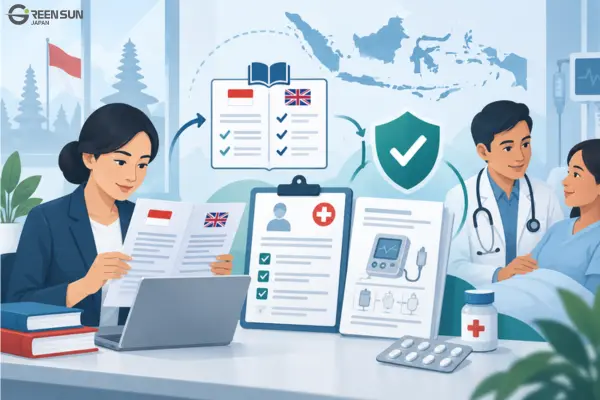
Medical translation is not simply the process of converting words and sentences from one language into Indonesian. For patient instruction materials, medical device Instructions for Use, clinical research documentation, or chemical safety data sheets, even a small error in terminology, dosage figures, or contraindication warnings can completely distort the reader’s understanding and lead to serious consequences for safety.
Therefore, Indonesian medical translation services require a close combination of native-language proficiency, in-depth knowledge of specialized medical terminology, and a QA quality control process specifically adapted to the risk level of each individual document.
📌 Key Takeaways / Direct Answer:
- Nature of the service: Indonesian medical translation is a specialized translation process that focuses on protecting patient safety through strict control over the accuracy of numerical data, units of measurement, warnings, and operating or procedural instructions.
- Four high-risk document groups: Clinical research documentation, medical device Instructions for Use, SDS/MSDS chemical safety data sheets, and discharge documents or treatment instructions intended for patients.
- Audience-based translation principles: Clinical and medical device documents require scientific accuracy and complete consistency of terminology across the entire document set; meanwhile, patient-facing materials must use clear, accessible, and easy-to-understand language that clearly answers three questions: What do I need to know? What do I need to do? When should I contact a doctor?
- DTP formatting and layout checkpoint: For medical device instructions containing numerous diagrams, illustrations, and tables, checking the layout after DTP is a mandatory step to ensure that important hazard or safety warnings are not separated from the corresponding visual illustrations.
- Green Sun Japan solution: Green Sun Japan provides comprehensive Indonesian medical translation services, with support for translation memory management, specialized terminology glossaries, and a multi-layer QA process designed to meet the strict requirements and standards of international healthcare corporations.
Contents
- 1. What types of medical documents commonly need to be translated into Indonesian?
- 2. Why does medical translation require a strict risk-control process?
- 3. How does medical translation directly affect patient safety?
- 4. 6-Step Quality Control Process for Indonesian Medical Translation
- 5. Criteria for Selecting a Reliable Medical Translation Service Provider
- 6. Conclusion
- 7. Frequently Asked Questions (FAQ)
1. What types of medical documents commonly need to be translated into Indonesian?
The scope of Indonesian medical translation is highly diverse. The level of review and the allocation of personnel should be determined based on the actual consequences that could arise if errors occur in the document:
| Document category | Practical examples | Risk level | Quality control focus |
|---|---|---|---|
| Patient documents | Treatment instructions, prescriptions, discharge instructions, and treatment consent forms. | High | Clear and easy-to-understand language for the general public, dosage warnings, and self-care instructions. |
| Medical device documents | Instructions for Use (IFUs), device warning labels, and medical equipment maintenance manuals. | Very high | Standardized terminology, contraindications, the correct sequence of device operation, and accurate links between text and images. |
| Clinical research documentation | Study protocols, Case Report Forms (CRFs), and patient questionnaires. | Very high | Academic and scientific accuracy, together with consistent terminology across all trial-related documents used in Indonesian clinical translation. |
| Chemical safety data sheets | SDS/MSDS for medical chemicals, operating room disinfectant solutions, and biological reagents. | Very high | Accurate chemical terminology, emergency first-aid instructions, and temperature-related storage conditions. |
| Hospital communication materials | Clinic signage, appointment procedures, and fasting instructions before medical tests. | Medium to high | Clear information, accurate timeframes, and specific instructions on what actions need to be taken. |
| Medical training materials | Nursing training textbooks and training materials for medical technicians. | Medium | Conceptual accuracy, logical presentation, and the ability of learners to understand and absorb the knowledge. |
2. Why does medical translation require a strict risk-control process?
A single translation workflow cannot be applied to every type of medical document. Each document category serves a different target audience and is used in a completely different context:
- Clinical documents: The top priority is absolute terminology consistency across study protocols, documents prepared for ethics committees, and questionnaires intended for clinical trial participants.
- Medical device documents: The translation must maintain an exact relationship between operating commands, warning parameters, international safety symbols, and assembly diagrams.
- SDS/MSDS chemical safety data sheets: Absolute accuracy is required in hazard identification, accident-related first-aid measures, and storage conditions intended to prevent fire and explosion risks.
- Patient instruction materials: Complex medical terminology must be converted into clear, accessible, and easy-to-understand language that does not cause unnecessary concern, while still ensuring that patients correctly follow the prescribed treatment regimen.
3. How does medical translation directly affect patient safety?
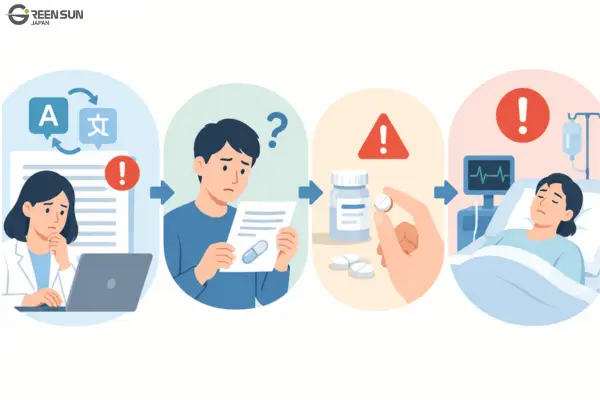
In healthcare settings, the quality of a translation directly affects the clinical decisions made by doctors and healthcare professionals, as well as the way patients use medications:
Translation error ➔ Misunderstanding of instructions ➔ Incorrect dosage or improper device operation ➔ Life-threatening risk
Key points that must be carefully reviewed:
- Dosage and units of measurement: Confusing mg with mcg, or using an incorrect decimal separator, can result in a fatal overdose.
- Frequency and timing of use: The interval between doses, whether medication should be taken before or after meals, and the required fasting period before surgery must all be translated accurately.
- Warnings and contraindications: Critical negative instructions such as Do not administer intravenously or Do not reuse can turn a safety instruction into a dangerous action if the negative wording is accidentally omitted during translation.
- Sequence of medical device operation: The order of switching on the device, releasing pressure, or disinfecting the equipment must be absolutely accurate at every stage of the sequential operating process.
The 3-question rule for patient documents: A high-quality medical translation intended for patients should help them clearly answer the following questions for themselves: 1. What do I need to know? 2. What steps do I need to take? 3. When do I need to urgently contact a healthcare facility?
4. 6-Step Quality Control Process for Indonesian Medical Translation
| Process Step | Control Focus | Specific Technical Actions |
|---|---|---|
| 1. Document and risk classification | Determine the required level of review | Classify the document as clinical, medical device, SDS, or patient-related material in order to select the most appropriate quality control workflow. |
| 2. Terminology standardization | Ensure terminology consistency | Establish a standardized terminology glossary covering disease names, anatomical terms, pharmaceutical active ingredients, warnings, and abbreviations. |
| 3. Translation by medical specialists | Ensure in-depth subject-matter expertise | Assign Indonesian translators who have relevant qualifications or practical experience in pharmaceuticals and medical devices. |
| 4. Bilingual cross-checking | Conduct an independent bilingual review | A second specialist compares the source and target text sentence by sentence to eliminate omissions, incorrect negative statements, numerical errors, and mistakes in units of measurement. |
| 5. Post-layout formatting check | Review formatting after DTP layout | Review the final design file to ensure that tables remain properly aligned, warnings stay close to the corresponding illustrations, and no lines of text are missing. |
| 6. Document version management | Avoid confusion with outdated documents | Record changes between updated document versions and store approved translations in the translation memory for consistent future use. |
5. Criteria for Selecting a Reliable Medical Translation Service Provider
Healthcare companies, pharmaceutical companies, and medical device manufacturers should evaluate translation partners based on a practical competency matrix:
| Evaluation criteria | Required provider capabilities | Risks if the provider lacks capability |
|---|---|---|
| Medical specialization | Translators with hands-on experience in the specific document niche, such as medical device IFUs or clinical trial documentation. | Awkward, dictionary-based translations that fail to reflect the actual context in which the document is used. |
| Independent review process | A mandatory independent cross-check conducted by a second medical language specialist. | Failure to detect subjective errors, missing words or content, or incorrect numerical data introduced by the primary translator. |
| DTP layout capabilities | The ability to handle complex design and publishing files such as InDesign, Illustrator, and FrameMaker. | Broken text frames, layout errors, or missing safety warnings on product packaging labels and instruction documents. |
| Translation memory management | The use of translation technology to maintain translation memories and dedicated terminology glossaries for each company or brand. | Fragmented terminology across different product batches and additional costs caused by having to translate previously completed content again from scratch. |
| Medical data confidentiality commitment | Signing non-disclosure agreements (NDAs) and applying secure data encryption procedures for sensitive information. | Leakage of personal data belonging to clinical trial participants or disclosure of confidential invention-related information. |
6. Conclusion
Indonesian medical translation services should not be evaluated solely on the basis of low cost or immediate translation speed. The core value of a medical translation lies in scientific accuracy, consistency of terminology, and its ability to protect the safety of both patients and healthcare professionals throughout the process of use and operation.
By correctly classifying the risk level of each document, establishing a standardized terminology set, and applying an independent cross-checking process together with post-layout verification, healthcare companies can more confidently meet stringent inspection and quality requirements while building a strong and reliable reputation in the Indonesian market.
7. Frequently Asked Questions (FAQ)
Q1. Should all specialized medical terminology be translated into Indonesian?
Not necessarily. Many internationally recognized medical terms, names of pharmaceutical active ingredients, names of specialized medical devices, or standard codes should remain in their original English or Latin form, accompanied by an Indonesian explanation where necessary to ensure that they remain universally recognizable among doctors and healthcare professionals. The appropriate approach depends on whether the intended readers are healthcare professionals or patients.
Q2. Do medical device Instructions for Use (IFUs) require a dedicated translation process?
Yes. A dedicated process is required. IFU documents contain numerous safety warnings such as Warning, Caution, and Danger, sequential operating steps, and content that is directly linked to diagrams showing buttons and device controls. A bilingual cross-checking process and a DTP layout review should therefore be applied to ensure that translated text is not obscured by illustrations and that important instructions remain correctly associated with the relevant images.
Q3. What does the QA process for Indonesian medical translation focus on?
The QA process for Indonesian medical translation focuses on checking semantic accuracy, terminology consistency, decimal separators and dosage figures, units of measurement, negative statements, and the overall integrity of the content after it has been incorporated into the final design file.
Q4. What legal consequences can errors in medical translation lead to?
Errors in the translation of pharmaceutical labels or medical device instructions may result in pharmaceutical or regulatory authorities refusing to grant marketing authorization. In more serious cases, companies may also face compensation claims or legal disputes if translation errors contribute to an incident that causes harm to a patient.
Q5. Do SDS/MSDS chemical safety documents require a specialized translator?
Yes, specialized expertise is highly necessary. SDS/MSDS documents contain chemical terminology, toxicity levels classified under the GHS system, and emergency response and first-aid instructions. The translator therefore needs knowledge of chemistry and occupational safety to ensure the accuracy of the technical data and indicators contained in the document.

🚀 Comprehensive Indonesian Medical Translation Solutions with Green Sun Japan
Is your company looking for a professional translation partner for clinical documentation, medical device instructions, or chemical safety data sheets into Indonesian?
Green Sun Japanworks alongside global healthcare corporations, pharmaceutical companies, and medical device manufacturers by providing specialized Indonesian medical translation solutions:
· 🩺 Native medical experts: Translators and reviewers with practical knowledge of pharmacology, medical device mechanisms, and clinical standards.
· 🛡️ Multi-layer risk control: An independent cross-checking process, combined with dedicated reviews of numerical data and safety warnings before final delivery.
· 💻 DTP layout and language asset management services: Professionally finalized post-layout files, synchronized terminology glossaries, and translation memories that help optimize costs for long-term translation projects.
👉 [ContactGreen Sun Japantoday to receive consultation and a quotation for Indonesian medical translation services that best suit your project!]