A sudden spike in support tickets is not the biggest risk. The bigger problem is when every agent responds in a different way.
When a business expands customer support in the Philippines, customer inquiries can grow quickly across email, live chat, chatbots, social media, help centers, and ticketing systems. If the team relies only on English, or leaves each agent to handle translations on their own, customer support can quickly become slower, more expensive, and less consistent.
This is where Tagalog machine translation services become an important part of a customer support strategy. By combining machine translation with Tagalog MTPE, businesses can process repetitive content faster, standardize macro responses, optimize FAQs, improve live chat, and still maintain quality in important situations.
Contents
- 1. Why Customer Support in the Philippines Needs Tagalog Machine Translation
- 2. How Machine Translation and MTPE Help Reduce Costs
- 3. Practical Use Cases for FAQs, Tickets, Live Chat, Macro Responses, and Help Centers
- 4. How to Implement the Workflow While Maintaining Service Quality
- 5. Conclusion
- 6. FAQ

1. Why Customer Support in the Philippines Needs Tagalog Machine Translation
The Philippines has a flexible language environment. English is widely used, but customers often switch between Tagalog, Filipino, and Taglish, a mixed writing style that blends English and Tagalog.
A customer may send an email in English, then write in live chat: “I already paid pero hindi pa rin active yung account ko.” This means the customer has already paid, but the account has still not been activated. If an agent is not familiar with this type of expression, they may need more time to understand the issue or may have to transfer the ticket.
When a business handles thousands of tickets every month, every delayed minute adds cost. For this reason, Tagalog machine translation services should be viewed as part of the customer support translation Philippines workflow, not just as a tool for translating individual sentences.
Businesses also need to understand the difference between Tagalog and Filipino. Filipino is the national language and one of the official languages of the Philippines. Tagalog is an important foundation of Filipino and is closely tied to everyday communication. FAQs and help centers may be better suited to Filipino machine translation because they require a clear, neutral style. Live chat, short tickets, and macro responses may need Tagalog machine translation to sound more natural and approachable.
For example, the sentence “How do I reset my password?” can be standardized as both an FAQ and a macro response. Machine translation can be used to create the draft, followed by one round of post-editing. However, the sentence “I was charged twice and I need a refund” involves payment, refund handling, and negative customer sentiment, so Tagalog MTPE is needed to avoid policy-related errors.
2. How Machine Translation and MTPE Help Reduce Costs
The ROI of Tagalog machine translation services is not only about lowering translation costs. The real value comes from reducing ticket handling time, cutting repetitive work, lowering dependency on bilingual staff, and minimizing inconsistent responses.
For example, a SaaS company may receive 10,000 tickets per month in the Philippines. If around 60% of those tickets are repetitive questions about login issues, password resets, payment updates, subscription cancellations, or account checks, handling everything manually would be costly. But if FAQs and macro responses are first processed through Tagalog machine translation or Filipino machine translation, then standardized through Tagalog MTPE, agents can select approved templates instead of writing every response from scratch.
Cost reductions of up to 60% are usually most achievable for highly repetitive content such as FAQs, macro responses, common tickets, and standard help center articles. This is not a guaranteed result for every type of content. High-risk cases involving payments, refunds, security, complaints, or terms of service still require careful review.
| Support content type | Recommended approach | Operational benefit |
|---|---|---|
| Common FAQs | Filipino or Tagalog machine translation, reviewed once | Reduces new tickets |
| Macro responses | Tagalog machine translation combined with Tagalog MTPE | Helps agents reply faster and more consistently |
| Live chat | AI translation for Tagalog combined with approved templates | Speeds up responses |
| High-risk tickets | Tagalog MTPE or specialist review | Reduces misunderstandings |
| Help center | Machine translation, post-editing, and terminology standardization | Reduces support workload |
To measure ROI, businesses should track first response time, average handling time, cost per ticket, first contact resolution rate, reopened ticket rate, and the percentage of customers who resolve issues through the help center.
3. Practical Use Cases for FAQs, Tickets, Live Chat, Macro Responses, and Help Centers
For FAQs, the goal is to help customers find answers before they create a ticket. Questions about password changes, delivery address updates, order status checks, or subscription cancellations can be processed through Filipino machine translation to create a draft, followed by a review of terminology and instruction logic.
For tickets, the biggest challenge is context. AI translation for Tagalog can help agents quickly understand the initial message, but tickets involving payments, refunds, or complaints still require Tagalog MTPE.
For live chat, speed is critical. Businesses should prepare macro responses in Tagalog or Filipino that have already been post-edited and classified by situation. Agents can then select the right template, make small adjustments based on context, and send the reply faster.
For macro responses, businesses should treat them as long-term operational assets. A macro used to apologize for a delayed delivery should not be used for a payment error. A refund confirmation macro should not be used when the customer’s request is still under review. When Tagalog machine translation is used to create the initial draft, Tagalog MTPE helps make the wording natural, policy-compliant, and consistent.
For help centers, well-translated articles can significantly reduce repetitive tickets. However, if button names are translated incorrectly, the order of steps is wrong, or the terminology does not match the interface, customers will not be able to resolve issues on their own. For example, if the interface keeps the button name “Billing” in English, the translation should not replace it with a different term that makes the button harder to find.
A practical workflow can start with the 100 most common tickets from the past three months. The support team groups tickets by topic, rewrites them into standard English macro responses, uses Tagalog machine translation or Filipino machine translation to create drafts, and then applies Tagalog MTPE to finalize them. After one month, the business measures average handling time, macro usage rate, and the number of reopened tickets.
4. How to Implement the Workflow While Maintaining Service Quality
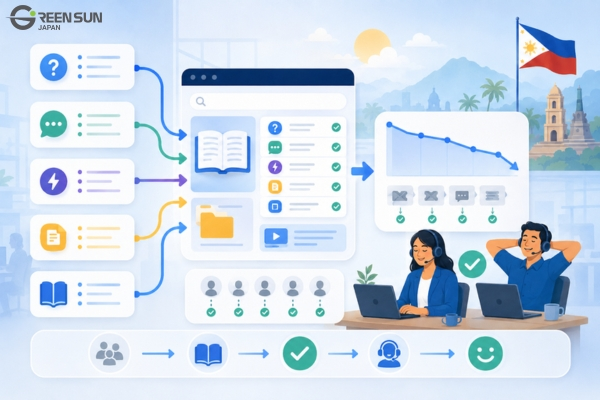
An effective Tagalog machine translation services project should begin with real support data: past tickets, live chat transcripts, existing FAQs, current macro responses, and high-traffic help center articles.
First, the business needs to classify content by frequency and risk. Low-risk content such as login, password reset, and order status checks can use Tagalog machine translation or Filipino machine translation. High-risk content such as refunds, payment errors, locked accounts, or complaints should combine AI translation for Tagalog with Tagalog MTPE.
Next, the business should build a glossary and style guide. The glossary should include product names, feature names, order statuses, error types, apology phrases, confirmation phrases, and terms that should not be translated. The style guide should define how FAQs and help center articles stay clear, how live chat remains concise, how complaint tickets sound polite, and how macro responses stay consistent without feeling robotic.
After that, the business should launch a pilot with the 50 to 100 most frequently used macro responses or the 20 most important help center articles. The workflow should include machine translation, MTPE, QA against the glossary, implementation in the support system, and performance tracking.
5. Conclusion
Expanding customer support in the Philippines is not only about hiring more agents. When FAQs, tickets, live chat, macro responses, and help center content grow quickly, businesses need a language workflow that can handle large volumes while maintaining service quality. Tagalog machine translation services help speed up repetitive content, Filipino machine translation supports official guidance materials, and Tagalog MTPE helps control accuracy, tone, and risk.
Green Sun Japan provides translation solutions for businesses expanding multilingual customer support, including Tagalog machine translation, Filipino machine translation, Tagalog MTPE, glossary development, macro response standardization, FAQ translation, help center optimization, and AI translation quality checks. The strength of Green Sun Japan lies not only in translating content, but also in helping businesses design a translation workflow that fits real customer support operations.
If your business is scaling in the Philippines, Green Sun Japan can help you start with a small pilot: select high-frequency FAQs, tickets, or macro responses, implement machine translation combined with MTPE, measure results using operational metrics, and then expand the workflow step by step.
6. FAQ
1. Are Tagalog Machine Translation Services Suitable for Customer Support in the Philippines?
Yes. Tagalog machine translation services are suitable for businesses with many FAQs, tickets, live chat messages, macro responses, and help center articles that need to be processed quickly. Sensitive content such as refunds, payments, complaints, and security still requires Tagalog MTPE.
2. Should Businesses Use Tagalog Machine Translation or Filipino Machine Translation?
Filipino machine translation is usually suitable for FAQs, help centers, and official guidance content. Tagalog machine translation is more suitable for live chat, tickets, and macro responses that need a more approachable feel.
3. How Does Tagalog MTPE Help Reduce Costs?
Tagalog MTPE uses machine translation as a draft, then a human editor checks meaning, terminology, tone, and context. This approach is often faster than translating from scratch for repetitive content.
4. Can AI Translation for Tagalog Be Used Directly in Live Chat?
It can be used to support agents, but it should be combined with approved macro responses. Agents still need to make quick adjustments based on the situation before sending replies to customers.
5. How Can Businesses Measure the ROI of Machine Translation in Customer Support?
Businesses should track first response time, average handling time, cost per ticket, first contact resolution rate, reopened ticket rate, and the percentage of customers who resolve issues through the help center.
Contact Green Sun Japan for advice on machine translation, MTPE, and QA workflows for customer support in the Philippines. With email responses within 30 minutes, a thorough internal checking process, an office in Japan, and experience handling projects for the Japanese government, Fuji Xerox, Hitachi, and Panasonic, Green Sun Japan helps businesses reduce translation risks while optimizing costs.
Green Sun Japan supports FAQs, tickets, live chat, macro responses, help centers, transactional emails, e-commerce content, websites, technical documents, and multilingual marketing materials. Start with a small pilot to verify effectiveness before expanding the workflow across your entire operation.