

Chinese AI Translation: When to Use AI and Human Review
Chinese AI translation can speed up work on product catalogs, FAQs, and multilingual websites. But a fluent draft can still contain the wrong terminology, an omitted condition, or wording intended for a different Chinese-speaking market. Publishing it without suitable checks can create customer confusion and costly rework.
When should a business use it? Unedited AI output can be useful for low-risk reference material. Customer-facing content usually needs machine translation post-editing (MTPE), while legal, safety-critical, or brand-sensitive material needs specialist review and may be better translated by a human from the outset. Choose the workflow by intended use, source quality, and the consequences of an error.
Key takeaways
- Specify the language direction, target market, and Simplified or Traditional Chinese before translation.
- Use AI for suitable drafts; agree on the scope of human review before publication.
- Keep translation memory and terminology resources separate from the translation engine.
- Test representative content before committing an entire project to AI or MTPE.
Contents
- 1. Chinese AI Translation, MTPE, and Human Translation
- 2. When Chinese AI Translation Works Well
- 3. Chinese Translation Risks That Need Human Review
- 4. How Translation Memory and Glossaries Improve Consistency
- 5. How to Choose and Test Your Translation Workflow
- Frequently Asked Questions
- How Green Sun Supports Chinese Translation Projects
1. Chinese AI Translation, MTPE, and Human Translation
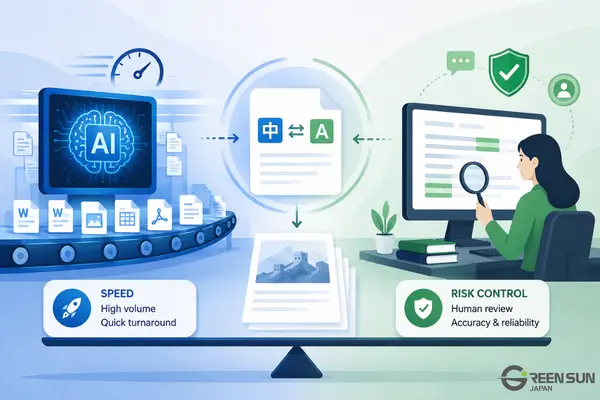
AI translation is an umbrella term that includes neural machine translation (NMT) and translation generated by large language models (LLMs). Machine translation produces a draft automatically; MTPE describes the human editing process applied to that draft. These are overlapping technologies and workflows, rather than three unrelated products.
| Approach | Starting point | Human involvement | Typical use |
|---|---|---|---|
| Unedited AI / machine translation | Machine-generated draft | No professional editing | Low-risk reference or initial content triage |
| MTPE | Machine-generated draft | A linguist checks and edits against the source; additional review depends on scope | Suitable business content with an agreed quality target |
| Human translation | Translator produces the translation | Translation and review according to the project brief | Content needing nuanced interpretation, specialist knowledge, or creative adaptation |
In machine translation post-editing, a linguist checks meaning, omissions, terminology, grammar, and readability against the source. Light editing and publication-ready editing have different goals. A separate final reviewer is an additional workflow step and should be specified in the quotation.
Human translators can also use computer-assisted translation (CAT) tools, translation memory, and glossaries. Quality depends on the people, instructions, and review process as well as the method used to produce the first draft.
2. When Chinese AI Translation Works Well
Chinese machine translation can be useful when the source text is clear, the content repeats, and reviewers can verify the result efficiently. Suitable candidates for a tested AI-and-editing workflow include:
- FAQs and knowledge-base articles with stable terminology.
- Product descriptions that share approved templates.
- Routine support content and recurring website updates.
- Internal reference material where approximate understanding is sufficient.
Repetition alone does not make content low-risk. A catalog may mix basic descriptions with safety warnings, warranty conditions, and technical specifications. Separate those fields and assign the appropriate review level.
For example, a retailer could reuse approved translations for recurring product features, post-edit new descriptions, and send warnings to a specialist reviewer. Test the new material before scaling the workflow: poor machine output can take longer to repair than to translate from scratch.
3. Chinese Translation Risks That Need Human Review
Simplified Chinese, Traditional Chinese, and target market
Define the intended market and writing system before translating. Google Cloud, for example, lists distinct Chinese language and locale options, including Simplified and Traditional Chinese. Check the options supported by the specific translation tool you plan to use.
For localization, character conversion is only one check. Review terminology, tone, punctuation, and product names for the intended audience. A Traditional Chinese version intended for Taiwan may still need adaptation for Hong Kong. When translating Chinese into English, specify the target English locale and retain the context needed to interpret the Chinese source.
Terminology, context, and missing meaning
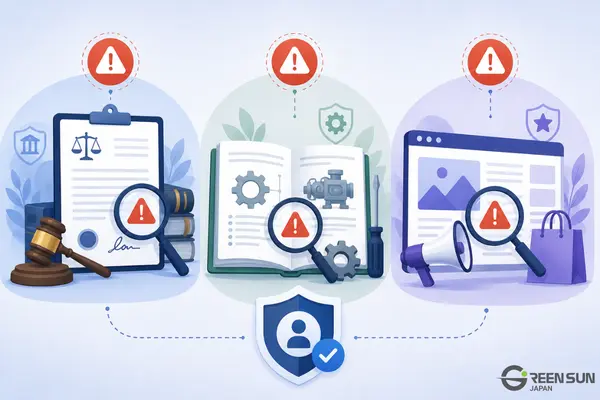
Short interface labels, isolated product fields, and ambiguous sentences can lose essential context. Provide surrounding text, screenshots where useful, and approved terms. Reviewers should check negation, quantities, units, names, omissions, and any information added without support from the source.
Legal and technical content
Contracts, NDAs, operating instructions, and safety notices need reviewers who understand the subject. Compare obligations, exceptions, specifications, and procedural steps directly with the source. A natural-sounding sentence is not evidence that these details are correct.
A legal translator checks linguistic accuracy; legal interpretation or advice may require qualified counsel. Likewise, technical translation review may need an engineer or product owner to resolve source ambiguities. Agree on those responsibilities before work starts.
Brand voice and customer-facing content
Sales pages, brochures, and campaigns need language that fits the brand and audience. Post-editing may be sufficient for straightforward copy. Slogans, humor, and persuasive messaging may need human adaptation or transcreation, with approval from the content owner.
4. How Translation Memory and Glossaries Improve Consistency
Translation memory (TM) stores source segments and their approved translations for reuse. A glossary records preferred translations for individual terms. An MT engine generates translations. These resources can work together, but having a TM does not automatically train or control an AI model.
- Reuse approved segments: check that each match still fits the new context and target market.
- Maintain a glossary: include product names, technical terms, abbreviations, and terms that should remain untranslated.
- Clean bilingual data: remove duplicates, incorrect alignments, and outdated translations before reuse.
- Separate locale resources: label Simplified and Traditional Chinese assets clearly.
- Run QA and review: check numbers, placeholders, missing text, and terminology, then resolve issues in context.
Some translation tools can apply glossaries during generation. Google Cloud’s glossary documentation explains how this supports consistent domain terminology. The workflow must explicitly apply the glossary; a separate term list alone will not change the output.
For recurring projects, Green Sun’s translation memory and bilingual data services can support the preparation and maintenance of reusable language resources.
5. How to Choose and Test Your Translation Workflow
Choose the workflow by content type and test it on representative material. The following is a starting framework; the source quality and intended use determine the final review scope.
| Content type | Suggested starting workflow | Checks before use |
|---|---|---|
| Low-risk internal reference | AI for initial understanding | Check details that affect decisions; identify uncertain passages |
| Routine FAQs and product descriptions | TM reuse plus MTPE for new content | Meaning, terminology, script, locale, numbers, and readability |
| Public website and support content | MTPE or human translation | Complete bilingual review, brand voice, links, and layout |
| Contracts, manuals, and safety warnings | Specialist human translation, or MTPE after a suitability test | Subject expertise, critical details, and an agreed independent review step |
| Slogans and creative campaigns | Human adaptation or transcreation | Audience fit, intended message, and brand approval |
Before approving a full project:
- Define the brief: source and target languages, Chinese market, audience, intended use, and deadline.
- Prepare the inputs: editable files, approved references, terminology, and context for short text.
- Run a pilot: include typical passages and difficult examples; assess accuracy and editing effort.
- Set acceptance criteria: agree what reviewers must check and how questions or critical errors will be resolved.
- Confirm delivery and data handling: specify file formats, layout checks, approved AI tools, and confidentiality requirements.
Compare the total work involved, including preparation, post-editing, review, and formatting. A lower machine-translation cost does not necessarily mean a lower final project cost.
Frequently Asked Questions
1. Can Chinese AI translation be used without editing?
It can help with low-risk reference material when approximate understanding is acceptable. Internal content can still be sensitive or important. Verify details before using the translation to make decisions, publish information, or instruct customers.
2. What does Chinese MTPE include?
MTPE involves a linguist reviewing and editing a machine translation against its source. The brief should specify accuracy, terminology, fluency, and style requirements. Confirm separately whether the service includes independent revision, final QA, and layout checks.
3. Is translation memory the same as machine translation?
No. Translation memory retrieves previously translated segments; machine translation generates output. Both can be used within the same project, and reused segments still need context checks.
4. Can AI be used for product catalogs?
Yes, as part of a tested workflow for clear, repetitive content. Review product identifiers, dimensions, units, compatibility, claims, and warnings. Keep high-risk fields out of any process that relies on unedited output.
5. Can the same Chinese translation serve every market?
Do not assume so. Specify the required script and audience, then review regional terminology and tone. Converting characters between Simplified and Traditional Chinese does not complete localization.
6. Is MTPE always cheaper than human translation?
No. Savings depend on the source, initial output quality, repetition, and required review. A pilot helps estimate actual editing effort and identify content that is more efficient to translate directly.
How Green Sun Supports Chinese Translation Projects
Green Sun Japan provides Chinese translation services, MTPE, terminology and translation memory support, and multilingual DTP. These services help businesses coordinate language work and file preparation across recurring content projects.
- Language review: discuss the subject expertise, target locale, and level of editing needed.
- Consistency: prepare approved terminology and reusable translations for future updates.
- Delivery: agree on final QA responsibilities and formatting requirements at the quotation stage.
Request a Chinese translation or MTPE quotation with a representative sample, word count, language direction, target market, file format, and deadline. If you already have AI output, include it for review so the proposed workflow reflects the actual editing work.