

Hindi Translation Services: What to Translate First in India
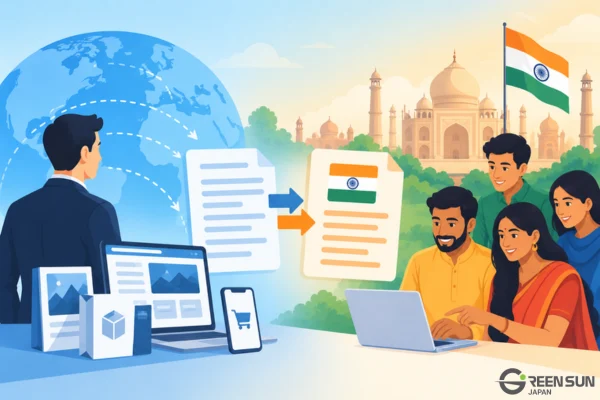
India is a multilingual market; therefore, businesses should not attempt to translate all content into Hindi simultaneously. Instead, they should identify the touchpoints that directly influence purchasing decisions and the customer experience to prioritize them for localization.
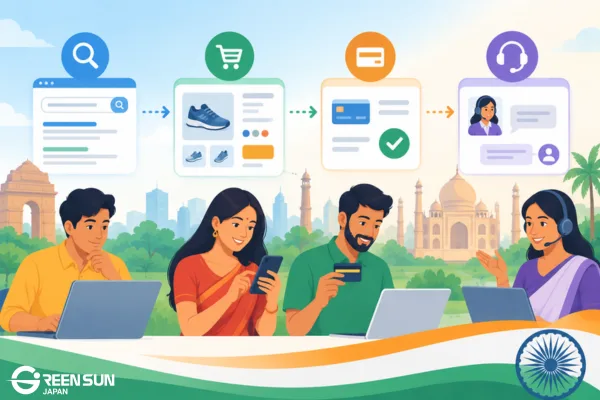
For most B2C brands, the recommended order of priority is: website/landing pages → product content and packaging → customer support content → marketing campaign materials → after-sales content. For B2B enterprises, priority is typically given to websites, company profiles, sales collateral, product specifications, and partner support materials.
Hindi translation services for market entry must go beyond accurate language conversion. They require careful handling of terminology, marketing messages, calls to action (CTAs), phrasing, and usage context so the content resonates with audiences in India.
📌 Key Takeaways
- Prioritize content that directly impacts product understanding, purchasing decisions, and product usage.
- It is not necessary to translate the entire website during the market testing phase.
- Hindi marketing translation requires message localization rather than word-for-word translation.
- Packaging and product information must be separately reviewed for legal compliance before release.
- When expanding into multiple states or regions, businesses may need to use Hindi alongside English and other local languages.
Contents
- 1. What content should a brand translate into Hindi first?
- 2. How should the Hindi localization service process for market entry be carried out?
- 3. Checklist: Is the brand ready to translate content into Hindi?
- 4. When should businesses hire professional Hindi translation services?
- 5. Conclusion
- 6. Frequently Asked Questions (FAQ)
1. What content should a brand translate into Hindi first?
Prioritize based on business impact: focus first on content that helps customers learn about and purchase products, followed by content that supports product usage, and finally, expand to supplementary marketing assets.
1.1. Websites and landing pages should be translated first
If the market entry budget is limited, there is no need to translate the entire website; start with the pages that drive traffic and conversions.
Priority pages include:
- Homepage or landing page tailored to the Indian market
- Product/service pages
- Pricing or purchase information
- Shipping/returns
1.2. Accuracy is paramount for product copy and packaging
Information that helps buyers identify the product, understand its usage, and determine its suitability for their needs must take precedence over branding-related content.
Depending on the product, the content may include:
- Product name or description
- Uses and features
- Instructions for use
- Warnings
- Ingredients
- Storage instructions
- Safety guidelines
- Support contact information
Crucially, packaging translation should not be viewed merely as a marketing project. India’s Legal Metrology (Packaged Commodities) Rules mandate the inclusion of specific information on packaged goods—such as details regarding the manufacturer, importer, or packer; the product name; net quantity or weight; retail price; country of origin (for imports); and consumer care information where applicable.
Therefore, packaging translations require verification for both linguistic accuracy and regulatory compliance, in accordance with the specific product type and prevailing regulations.
1.3. FAQs and customer support content should be translated immediately after sales content
If customers can make a purchase in Hindi but cannot find assistance in the same language, the localization experience remains incomplete.
Businesses should prioritize frequently asked questions regarding:
- How to place an order
- Payment
- Delivery
- Exchanges/returns
- Warranty
- User manuals
- Troubleshooting
- Complaints and support contact
You can start with a set of 20–50 high-frequency questions rather than translating the entire knowledge base. The scope of content can be expanded later based on actual customer data.
1.4. Campaign materials require localization rather than word-for-word translation
Slogans, headlines, and advertisements need to convey the original’s persuasive intent; they do not necessarily need to retain the original sentence structure.
This is a key distinction between marketing translation and the translation of standard documents.
Content typically requiring localization or transcreation includes:
- Advertising headlines
- Slogans/taglines
- Banners
- Social media ads
- Video subtitles
- Email campaigns
- Promotions
- CTAs (Calls to Action)
- Influencer briefs
A slogan that sounds natural in English might come across as stiff or confusing if translated literally. Therefore, translators must understand the brand voice, target audience, and campaign objectives before selecting the appropriate wording.
2. How should the Hindi localization service process for market entry be carried out?
An effective process should start from identifying market and content priorities before proceeding with translation.
Step 1: Identify customers and target areas
Clarify geographic markets, personas, sales channels, and languages spoken by customers.
Step 2: Audit all content
List website, product copy, packaging, ads, videos, support content and sales materials.
Step 3: Prioritize
Divided into:
Must translate → Should translate → Translate later.
Step 4: Build terminology and style guide
Unify product names, industry terms, brand names, pronouns, CTAs and tone of voice.
Step 5: Translate and localize
Choose translation or transcreation depending on the content type instead of using one method for all documents.
Step 6: Linguistic QA and contextual review
Check:
✅Meaning
✅Data
✅Terminology
✅Spelling
✅Brand consistency
✅Layout
✅CTA
✅Content displayed on website/app
✅Related compliance requirements
Step 7: Update continuously
When products, websites or campaigns change, glossary and translation memory also need to be updated to avoid differences between versions.
3. Checklist: Is the brand ready to translate content into Hindi?
If the majority of answers are still “no,” the business should conduct a content audit and localization planning before sending all materials for translation.
| Content to be checked | Status |
|---|---|
| Target state/region in India identified | ☐ |
| Key customer segment identified | ☐ |
| Verified whether Hindi is the preferred language for that customer segment | ☐ |
| List of all content requiring localization compiled | ☐ |
| High-conversion web pages identified | ☐ |
| Content categorized (Must translate / Should translate / Translate later) | ☐ |
| Content requiring regulatory/legal review identified | ☐ |
| Glossary for product names and key terms established | ☐ |
| Brand voice defined | ☐ |
| Translation review process established | ☐ |
| Content verified after deployment to website/app | ☐ |
| Plan in place for updating translations when source content changes | ☐ |
4. When should businesses hire professional Hindi translation services?
Professional services should be used when the content directly impacts revenue, brand reputation, safety, legal obligations, or the customer experience.
This is particularly important for:
- Commercial websites and landing pages
- Packaging and product information
- Marketing campaigns
- Contracts and legal documents
- Technical manuals
- Customer support content
- Sales materials
- Content requiring consistent terminology across multiple channels
While AI or machine translation can be useful for gaining a general understanding of content or supporting certain workflows, materials intended for publication to customers still require review by individuals with the necessary linguistic competence and an understanding of the usage context. Even the National Portal of India notes that content automatically translated into other languages may not always be accurate and should not be regarded as an authoritative version.
5. Conclusion
When entering the Indian market, businesses should prioritize translating content closest to the customer journey—such as websites/landing pages, product information, packaging copy, FAQs, and support materials—into Hindi before expanding to campaign materials and other marketing assets. However, Hindi should not be assumed to be the sole language for the entire country; the scope of localization should be determined based on specific regions, customer segments, and target sales channels.
6. Frequently Asked Questions (FAQ)
1. Is it necessary to translate the entire website into Hindi?
Not necessarily. Initially, prioritize the homepage/landing page, product pages, pricing, FAQ, contact page, and other pages that directly impact conversions.
2. Is Hindi sufficient for selling across all of India?
Not in every case. Businesses should consider their target regions and customer base to decide whether to use Hindi, English, or additional local languages.
3. Can Hindi marketing content be translated directly from English?
While the English version can serve as the source, elements such as slogans, headlines, CTAs, and advertising copy often require localization or transcreation to preserve the intended message and persuasive impact.
4. Does product packaging require a separate review after translation?
Yes. In addition to linguistic QA, packaging should be checked for compliance with regulations applicable to the specific product type and distribution method in India prior to printing or release.
5. Can AI be used to translate Hindi content?
AI can assist with rapid translation or handle low-risk content. However, for e-commerce websites, marketing materials, packaging, legal documents, and technical documentation, human review is recommended, with the level of review tailored to the content’s risk profile.
Hindi Translation Services for Businesses Expanding into the Indian Market
Entering the Indian market involves more than simply translating content into Hindi. Businesses must determine which content to translate first, what requires localization, and what demands in-depth review. Green Sun Japan provides Hindi translation services for websites, business documents, marketing materials, products, and various other corporate assets. Workflows can be tailored to specific content groups, ensuring accuracy, terminological consistency, and suitability for the intended use.
Why Choose Green Sun Japan?
✅ Fast and transparent quotes, allowing you to manage translation costs without compromising on quality.
✅ A wide range of service packages to meet all your translation needs, along with support for all document formats.
✅ A commitment to delivering high-quality translations at reasonable prices.
Contact Green Sun Japan today for a consultation on the right solution for your specific needs.