


Japanese Obon Festival Etiquette: What Visitors Should Know
The Japanese Obon Festival is an important time for remembering ancestors, returning home, and reconnecting with family. For international visitors, Obon can also be a unique opportunity to experience Japanese traditions such as Bon Odori, lantern ceremonies, and local summer events.
Because Obon has both spiritual and community significance, visitors should approach it differently from an ordinary tourist festival. Knowing a few basic customs can help you participate respectfully while experiencing one of Japan’s most meaningful seasonal traditions.
📌 Quick Guide: Obon Etiquette for Visitors
If you are attending an Obon event in Japan:
- Respect ceremonies: Follow local instructions and maintain appropriate decorum.
- Mind your photography: Do not interrupt processions, dances, or religious activities to take photographs.
- Join Bon Odori thoughtfully: Enter the dance circle only when participation is open to the public.
- Observe venue rules: Follow guidelines for queues, food stalls, waste disposal, and performance spaces.
- Ask before shooting: Always seek permission before photographing individuals at graves or during private family ceremonies.
- Expect regional variations: Remember that Obon timing, customs, and practices vary significantly across different regions of Japan.
Contents
- 1. Can Foreign Visitors Participate in the Japanese Obon Festival?
- 2. Is Obon the Same as a Regular Japanese Summer Festival?
- 3. Be Careful When Taking Photos
- 4. How Should You Behave at Bon Odori?
- 5. Do You Need to Wear a Yukata?
- 6. Respect Grave Visits and Family Rituals
- 7. Remember That Obon Customs Vary by Region
- 8. Planning Travel During Obon
- 9. Common Obon Etiquette Mistakes to Avoid
- 10. Why Cultural Context Matters When Explaining Obon in English
- 11. Frequently Asked Questions (FAQ)
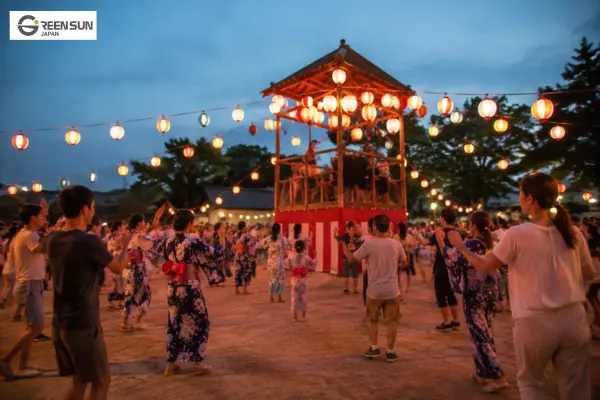
1. Can Foreign Visitors Participate in the Japanese Obon Festival?
In many cases, yes.
One of the easiest ways for visitors to participate is through Bon Odori, the traditional communal dancing associated with the Obon season. Many local Bon Odori events welcome members of the public, including international visitors.
The dances are usually performed in a circle around a central wooden platform called a yagura. Rather than worrying about performing every movement perfectly, visitors can watch the people around them and follow along.
The Japan National Tourism Organization (JNTO) notes that Bon Odori dancing at many summer festivals is open to everyone and that the basic movements are generally easy to learn. Participation, however, depends on the individual event. Always follow instructions from organizers and local participants.
2. Is Obon the Same as a Regular Japanese Summer Festival?
Not exactly.
Summer festivals (matsuri) in Japan often include food stalls (yatai), music, games, fireworks, and people wearing yukata. Obon events may include some of these elements as well, particularly Bon Odori. However, the cultural foundation of Obon is distinct.
Obon is traditionally associated with welcoming and honoring ancestral spirits. Families may visit graves (ohakarimairi), prepare altars, light lanterns, and spend quiet time together during this period. That means visitors should not treat every Obon-related activity purely as entertainment. A lively Bon Odori gathering is appropriate for dancing and socializing, while a grave visit or memorial ceremony requires considerably more restraint and respect.
3. Be Careful When Taking Photos
Photography is an area where cultural awareness is especially important. Large public Bon Odori events are generally highly visible, and photography is common. However, visitors should be much more cautious around religious ceremonies, cemeteries, temples, and private family activities.
Golden Rule of Festival Photography: A public celebration does not automatically mean every moment is public.
Avoid blocking participants or entering restricted areas simply to get a better photograph. When photographing individuals at close range, asking permission is the respectful choice. Visitors should be especially sensitive when families are paying respects at graves, as these moments are personal family remembrances rather than tourist attractions.
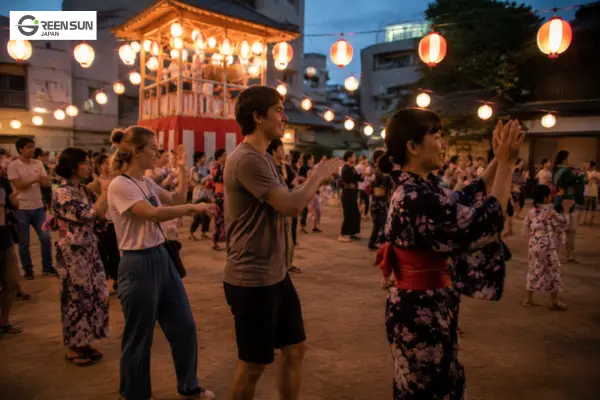
4. How Should You Behave at Bon Odori?
Bon Odori is usually one of the most accessible parts of the Japanese Obon Festival for international visitors. If the dance is open to the public, you can normally join the circle and imitate the movements of more experienced participants. You do not need to know the choreography beforehand.
Essential Bon Odori Etiquette:
- Enter properly: Join through an appropriate opening in the circle rather than cutting through active dancers.
- Follow the flow: Move in the same direction as the rest of the group.
- Do not block the circle: Avoid stopping suddenly in the middle of the dance space to take photographs.
- Maintain spacing: Give other dancers adequate physical space.
- Respect boundaries: Follow organizer announcements and do not enter areas reserved for featured performers.
5. Do You Need to Wear a Yukata?
No. A yukata (light cotton kimono) is a fun and culturally appropriate choice for summer events, but visitors are not required to wear one. Comfortable summer clothing is perfectly acceptable.
If you choose to wear a yukata, remember that August in Japan is hot and humid. Comfortable footwear (such as supportive sandals instead of unfamiliar wooden geta) and breathable clothing will make a long outdoor festival much more enjoyable. Focus on dressing appropriately for the weather, location, and activity.
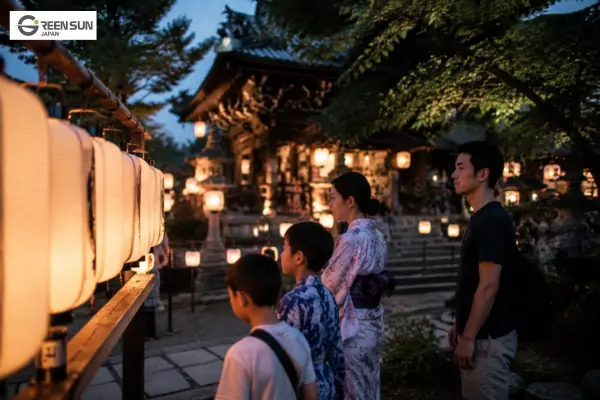
6. Respect Grave Visits and Family Rituals
One of the biggest differences between Obon and standard festivals is its emphasis on family remembrance. During Obon, families visit ancestral graves, clean gravestones, leave fresh flowers or food offerings, and burn incense.
These activities are private family rituals, not performances organized for tourists. Visitors who encounter such practices should observe quietly from a distance and avoid interfering. Unless invited by a local host, there is no reason to approach or imitate a private grave ritual.
· Explore the traditions and cultural significance of Obon in Japan
· Essential travel advice for visiting Japan during the Obon season
7. Remember That Obon Customs Vary by Region
There is no single Obon experience that applies everywhere in Japan. Most areas observe Obon in mid-August (Hachigatsu Bon), while some urban regions (like parts of Tokyo) observe it in mid-July (Shichigatsu Bon). Individual communities also maintain their own unique local dances and rituals.
A custom that is completely normal at a large urban Bon Odori may not be appropriate at a smaller village event. When in doubt, observe and follow the example of local participants.
📖 Read More: For a complete breakdown of Obon’s history, regional dates, major customs, and lantern rituals, read our comprehensive guide to the Japanese Obon Festival: Meaning, Dates, Customs, and Cultural Significance.
8. Planning Travel During Obon
Obon significantly impacts domestic travel across Japan. Millions of residents travel back to their hometowns, creating peak domestic travel demand.
| Travel Sector | Expected Obon Impact | Actionable Visitor Recommendation |
|---|---|---|
| Public Transit (Shinkansen & Flights) | Extreme congestion; reserved seats sell out weeks in advance. | Book all long-distance train and flight tickets well ahead of time. |
| Accommodations & Hotels | High occupancy and peak seasonal pricing nationwide. | Reserve hotel rooms months in advance, especially in rural areas. |
| Local Businesses & Dining | Many small family restaurants close for summer holidays. | Confirm operating hours in advance; do not rely on walk-ins. |
| Banks & Public Services | Essential infrastructure remains open as noted by travel platform MATCHA. | Standard banking and postal services operate on normal schedules. |
9. Common Obon Etiquette Mistakes to Avoid
| Common Mistake | Cultural & Operational Risk | Correct Etiquette |
|---|---|---|
| Treating All Activities as Entertainment | Offends locals performing solemn ancestral remembrances. | Separate festive Bon Odori dances from private memorial rituals. |
| Interrupting Ceremonies for Photos | Disrupts sacred processions and invades family privacy. | Observe from a respectful distance; ask before photographing individuals. |
| Assuming Identical Customs Everywhere | Leads to inappropriate behavior in traditional rural areas. | Observe local participants and follow regional event guidelines. |
| Entering Restricted / Private Spaces | Trespasses on sacred temple grounds or private property. | Stay within marked public spectator boundaries at all times. |
| Literal Cultural Communication | Misleads international audiences with overly flat translations. | Work with professional localizers to explain cultural context properly. |
10. Why Cultural Context Matters When Explaining Obon in English
Obon provides a clear example of why Japanese cultural content requires more than direct translation. Calling Bon Odori simply a “traditional Japanese dance” communicates the physical activity, but misses its connection to ancestral welcoming, seasonal gathering, and community memory.
Effective cultural localization must answer two questions simultaneously:
1. What does this Japanese term mean?
2. What context does an international reader need to appreciate it?
This distinction is vital for tourism boards, destination marketing organizations (DMOs), museums, hospitality brands, and cultural institutions presenting Japanese experiences to global audiences.
🚀 Communicating Japanese Culture to International Audiences with Green Sun Japan
Japanese cultural concepts rarely have exact one-to-one English equivalents. Translating the words is only the first step; effective content must preserve context, tone, and emotional resonance while remaining clear and natural to global readers.
Green Sun Japan provides specialized for businesses and organizations presenting Japan-related information across languages.
Why Leading Tourism & Cultural Brands Partner with Green Sun Japan:
- 🌸 Cultural Expertise: Native Japanese-to-English linguists who understand regional nuances and festival traditions.
- ⚡ Rapid 30-Minute Business Response: Fast scoping and consultation for international campaigns.
- 🛡️ 3-Tier Quality Assurance: Rigorous Translation ➔ Editing ➔ Cultural QA workflow.
11. Frequently Asked Questions (FAQ)
Q1. Can Tourists Join Bon Odori During Obon?
Yes! Many public Bon Odori events encourage visitors to participate. Watch experienced dancers, follow the direction of the group circle around the yagura, and respect instructions from event staff.
Q2. Is Obon a National Public Holiday in Japan?
Obon itself is not a statutory national public holiday. However, most Japanese companies grant employees summer leave during this period, leading to major nationwide travel shifts.
Q3. Is It Appropriate for Tourists to Visit Temples During Obon?
Generally, public temples remain open to visitors. However, you should strictly respect ongoing private family ceremonies, observe quiet zones, follow photography restrictions, and give worshippers space.
Q4. Can I Photograph an Obon Festival?
Photography is usually acceptable at public Bon Odori street dances. However, you should strictly avoid photographing private grave visits (ohakarimairi), temple rituals, or individuals at close range without permission.
Q5. What Should Visitors Wear to Bon Odori?
There is no requirement to wear traditional clothing. While yukata are popular and festive, clean and comfortable summer clothing paired with comfortable walking shoes is completely appropriate.
Q6. Why Are Obon Customs Different Across Japan?
Obon traditions evolved independently across local regions and Buddhist sects over centuries. Calendar timing (July vs. August), specific dance styles, food offerings, and lantern ceremonies naturally vary depending on the prefecture.