

English to Thai Translation for Businesses: Key Challenges and Effective Solutions
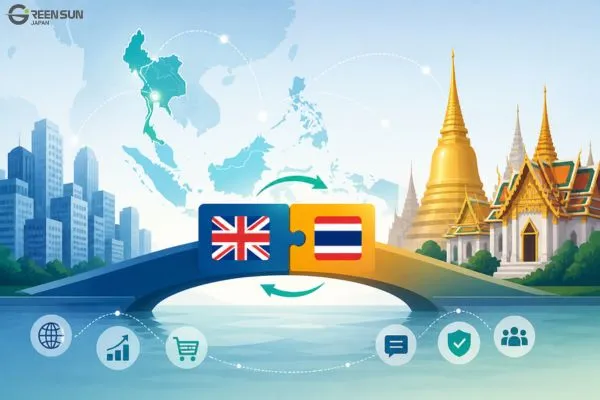
As businesses expand across Southeast Asia, English to Thai translation has become an essential bridge. But Thai is far from a simple language to translate. Its continuous script has no spaces between words, punctuation rules are not standardized, and grammar often changes depending on context. As a result, machine translation tools often struggle with Thai.
To ensure high-quality translations, businesses need to understand the language itself instead of relying entirely on artificial intelligence. With the right Thai translation tips, companies can navigate these challenges more effectively. Let’s look at why Thai is so difficult to translate and explore practical strategies for improving translation quality for business use.
1. Thai vs. English: Key Characteristics and Differences
In English to Thai translation, one of the biggest challenges comes from the fundamental differences between the two languages. It is not just about converting meaning from English into Thai. It is also about adapting the message to fit Thai sentence structure, cultural nuances, and real-world usage.
English follows a relatively clear, logical, and easy-to-analyze grammatical system. Thai, on the other hand, is much more flexible and depends heavily on context, tone, and situation. As a result, word-for-word translation often leads to inaccurate meaning, unnatural phrasing, or confusion for readers.
This is why many businesses struggle with English to Thai translation for marketing materials, corporate documents, website content, and internal communications. Applying the right Thai translation tips is essential to avoid these pitfalls. To better understand the differences, see the comparison below:
Understanding these differences is the foundation for producing accurate, natural, and effective Thai translations in business contexts.
2. Common Mistakes to Avoid
Although machine translation tools have improved significantly, they still struggle with English to Thai translation because of the fundamental differences between the two languages. These issues do not just affect accuracy. They can also weaken the user experience across websites, app interfaces, and e-commerce platforms.
Below are the most common mistakes businesses encounter, along with practical Thai translation tips to help improve quality:
❌ Wrong Word Segmentation
This is the most common and critical issue in Thai translation.
Unlike English, Thai does not use spaces to separate words. As a result, machine translation tools often fail to correctly identify word boundaries.
When segmentation is incorrect:
- Words may be merged or split incorrectly
- The meaning of the sentence can change entirely
- Native readers may find the text confusing or unnatural
👉 This is a fundamental issue that directly impacts the quality of english to thai translation.
❌ Literal Translation (Word-by-Word Translation)
One major limitation of machine translation is its tendency to translate word-by-word while preserving English sentence structure.
However, Thai:
- Relies heavily on context
- Has a flexible structure that differs significantly from English
👉 Result:
- Translations sound rigid and unnatural
- Marketing messages can become misleading or ineffective
❌ Tone & Formality Errors
Thai is highly sensitive to tone and levels of politeness.
Meanwhile, machine translation:
- Does not fully understand communication context
- Cannot capture a brand’s tone of voice
👉 This leads to:
- Content that is either too formal or too casual
- Messaging that does not fit the target audience
❌ Context Misinterpretation
Thai relies heavily on context, but machine translation processes content sentence by sentence.
👉 Consequences:
- Incorrect interpretation of meaning
- Inconsistent tone across paragraphs
- Loss of coherence throughout the content
❌ UI/UX Breaking Issues
This is a very common problem in localization for websites and applications.
Machine translation does not optimize for UI/UX:
- Sentences may be too long or poorly structured
- Text may not fit the design layout
- Content can overflow or be cut off
👉 Impact:
- Unprofessional interface
- Poor user experience
- Direct impact on conversion rates
❌ Inconsistent Terminology
Machine translation cannot maintain consistent terminology without proper training.
👉 This results in:
- The same term being translated in multiple ways
- User confusion
- Reduced brand credibility
3. Best Practices for Thai Translation in Business
To improve the quality of english to thai translation and minimize common errors, businesses cannot rely solely on machine translation tools. Instead, a combination of technology and human expertise is essential, along with strategies tailored to the unique characteristics of the Thai language.
Below are essential Thai translation tips to enhance accuracy, naturalness, and overall user experience:
✅ Work with Native Thai Translators
While machine translation can help increase speed, human expertise—especially native Thai translators—remains the key factor in delivering high-quality results.
They can:
- Correct word segmentation and sentence structure issues
- Adjust phrasing to sound natural and easy to understand
- Ensure appropriate tone and level of formality
💡 This is one of the most important Thai translation tips for achieving professional-quality output.
✅ Combine Machine Translation with Post-Editing (MTPE)
Instead of relying entirely on automation, businesses should adopt MTPE (Machine Translation + Post Editing).
How it works:
- Use machine translation to process large volumes of content quickly
- Have professional translators review and refine the output
👉 Benefits:
- Cost efficiency
- Faster turnaround time
- Maintained content quality
✅ Build a Thai Glossary (Terminology Management)
Inconsistent terminology is a major challenge in **english to thai translation**.
Solution:
- Create a dedicated glossary for each industry (e.g., gaming, e-commerce, UI, technical content)
- Standardize translations for key terms
👉 This ensures consistency and strengthens brand credibility.
✅ Optimize Content for UI/UX
Thai language structure can create display issues if not properly optimized.
Best practices:
- Use short, clear sentences
- Avoid overly long text
- Test how content appears within the actual interface
👉 Proper UI/UX optimization improves usability and user satisfaction.
✅ Train Translation Systems by Industry
Not all machine translation systems perform equally across different domains.
Solution:
- Train systems based on specific industries
- Use real-world data (product descriptions, UI text, game content, technical documents, etc.)
👉 This significantly improves translation relevance and accuracy.
✅ Check Tone and Cultural Nuance
Thai is highly sensitive to tone, politeness, and cultural context.
Ensure that:
- Content aligns with Thai cultural expectations
- Tone matches your brand identity
- Messaging resonates with the target audience
💡 This is a critical translation Thai tip for effective localization.
✅ Test with Real Users
This step is often overlooked but extremely valuable.
Approach:
- Conduct A/B testing with different content versions
- Collect feedback from native Thai users
👉 Outcome:
- Identify hidden issues
- Optimize real-world user experience
4. Real Use Cases: Website, App UI, and E-commerce
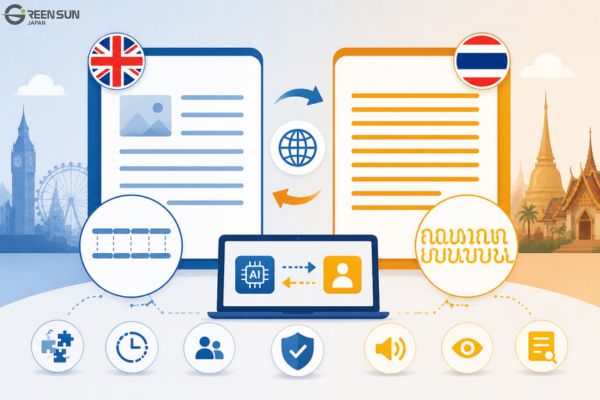
In practice, Thai localization challenges go beyond language rules. They can directly affect how users read, navigate, and make decisions on digital platforms. Even small linguistic issues can reduce trust or make a brand look less professional.
Here are three common business use cases.
🌐 Website Localization
For websites, Thai translations must not only be accurate but also natural, easy to read, and aligned with local reading behavior.
However, when relying solely on machine translation, businesses often face issues such as:
- Text appearing merged due to incorrect word segmentation
- Lack of proper punctuation, making content long and difficult to follow
👉 Solution:
- Optimize content based on Thai reading habits
- Combine machine translation with human editing (MTPE)
- Test readability before publishing
📱 App UI Translation
In mobile applications, screen space is limited, making translation issues more visible and impactful on user interactions.
Common problems include:
- Overly long text due to word-for-word translation
- Unnatural phrasing that confuses users
- Translations that do not fit the UI flow
👉 Solution:
- Use short, clear, and concise sentences
- Test translations directly within the actual interface
- Ensure linguistic review before deployment
🛒 E-commerce Content
In e-commerce, the quality of Thai content directly influences purchasing decisions.
Common issues:
- Incorrectly translated product names
- Unclear or unappealing product descriptions
- Weak or ineffective call-to-action (CTA)
Especially critical:
- Word segmentation errors that make products hard to understand
- Tone mismatches that reduce persuasive impact
👉 Solution:
- Localize content based on Thai consumer behavior
- Build a glossary to ensure terminology consistency
- Adjust tone to match local culture and expectations
🔍 Key Takeaways for Businesses
Across all three use cases, the core challenges in english to thai translation revolve around:
- No clear word boundaries in Thai
- Different punctuation usage compared to English
- Heavy reliance on context for meaning
👉 If not handled properly, translations can become:
- Difficult to read
- Incorrect in meaning
- Unnatural in tone
- Harmful to business performance
✅ What Businesses Should Do
To ensure high-quality english to thai translation, especially for critical platforms like websites, apps, and e-commerce, businesses should:
- Avoid relying entirely on machine translation
- Apply MTPE (Machine Translation + Post Editing) for balance between speed and quality
- Test translations in real usage contexts (UI, website layout, user flow)
5. Conclusion
English to Thai translation is not just a language conversion task. It is a localization process that requires an understanding of Thai culture, context, tone, and user behavior.
Features such as continuous script, flexible grammar, limited punctuation, and strong context dependence make Thai challenging for machine translation. Without proper review, even a small error can affect user experience, brand trust, and business performance.
For companies entering or expanding in the Thai market, high-quality translation should be seen as a long-term investment. The most effective approach is to combine technology with native expertise, prioritize localization over literal translation, and test content in real user contexts before publishing.
💡Final Thai translation tip: Combine human expertise with technology, prioritize localization over literal translation, and always adapt content to real user context. This is the key to achieving both accuracy and business impact.
6. FAQ
❓ Why isEnglish to Thai translation difficult?
💡 Thai does not use clear word spacing, punctuation is less structured than in English, and meaning often depends heavily on context. These characteristics can lead to segmentation errors, misinterpretation, and hard-to-read content if the translation is not reviewed carefully.
❓ Can I rely on Google Translate for Thai translation?
💡 You can use Google Translate for simple content such as short sentences or internal documents. However, for critical content like websites, app UI, or e-commerce platforms, relying solely on machine translation can result in incorrect meaning, inappropriate tone, and poor user experience.
💡 Thai translation tip: Use machine translation only as a starting point, and always apply human review for important content.
❓ Do I need a professional Thai translation service for business?
💡Yes. For customer-facing business content, professional translation helps ensure clear messaging, cultural relevance, consistent terminology, and a better user experience. This is especially important for marketing, websites, software, and e-commerce platforms.
❓ What industries benefit most from professional Thai translation?
The industries that benefit the most include:
- E-commerce
- Technology (apps, software)
- Travel & hospitality
- Gaming and digital content

For a professional English to Thai translation solution tailored to websites, apps, or e-commerce platforms, Green Sun Japan can help with a standardized translation process that combines advanced technology with experienced linguists. This ensures your content stays accurate while effectively reaching the right audience in the Thai market.