

Regulated Industry Translation: Legal, Medical & Financial — Professional Standards and Compliance Risks
In law, medicine, and finance, there is no such thing as “just a translation error.” The consequences can be severe: a contract rendered void, a regulatory submission rejected, a compliance violation triggered, or — in the worst case scenario — a direct threat to patient safety.
This is why translation in these regulated fields demands far more than language proficiency. They require deep domain expertise, rigorous quality control, and compliance with international standards.
Contents
- 1. What Is Regulated Industry Translation?
- 2. Which Regulated Industries Need Specialized Translation?
- 3. Overview of the Three Core Sectors Requiring Specialized Translation: Legal, Medical, and Financial
- 4. What Sets Regulated Industry Translation Apart?
- 5. Risks in Legal Translation Services
- 6. Medical Translation: Standards That Cannot Be Compromised
- 7. How to Select a Specialized Translation Provider
- 8. Financial Document Translation to International Standards
- 9. The Quality Assurance Process in Professional Translation
- 10. Target Market Considerations in Regulated Industry Translation
- 11. Conclusion
- FAQ — Frequently Asked Questions About Regulated Industry Translation
1. What Is Regulated Industry Translation?
Regulated industry translation refers to the conversion of documents in fields subject to strict compliance requirements. In such fields the translated output may be submitted to regulatory authorities, form legally binding text, function as product instructions, or constitute official public disclosures.
Unlike general translation, this discipline demands significantly higher standards of terminological accuracy, quality assurance, traceability, and confidentiality. Errors carry real consequences, such as legal liability, clinical risk, and financial loss.
2. Which Regulated Industries Need Specialized Translation?
Specialized translation for regulated sectors is not exclusively the domain of large enterprises. It is also critical for the following organizations:
- Law firms and in-house legal departments
- Pharmaceutical and medical device companies
- Hospitals and clinical research organizations (CROs)
- Banks, financial institutions, fintech companies, and insurers
- Listed companies or those raising capital in international markets
- Businesses expanding into Western, Japanese, or Asian markets
If your organization handles documents with legal or regulatory requirements, accurate, standards-compliant translation is essential.
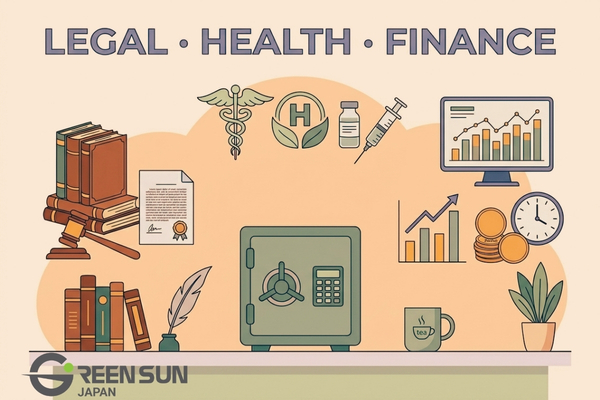
3. Overview of the Three Core Sectors Requiring Specialized Translation: Legal, Medical, and Financial
Depending on the sector, the categories of documents requiring specialized translation include:
⚖️ LEGAL
- Commercial contracts
- Court documents and filings
- Powers of attorney
- Articles of incorporation
- Non-disclosure agreements (NDAs)
⚕️ MEDICAL
- Instructions for Use (IFU) for medical devices
- Patient Information Leaflets (PILs)
- Clinical trial documentation
- Drug registration dossiers (CTD format)
💵 FINANCIAL
- Financial statements
- Prospectuses
- Audit reports
- Investor documentation
4. What Sets Regulated Industry Translation Apart?
4.1. Not General Translation — This is Achieving Compliance via Specialized Translation
General translation permits a degree of flexibility. Translators may paraphrase, select synonyms, or adjust tone to suit the target audience. Regulated translation allows no such latitude.
In regulated industries, translated documents often serve as legally binding or mandatory technical materials. A mistranslated term is not merely a linguistic mistake — it can lead to breach of contract, regulatory non-compliance, or even direct risk to end users.
4.2. Three Defining Characteristics of Regulated Translation
- Accountability: Translators must demonstrate verifiable competence — typically through domain-specific professional qualifications or a relevant academic background.
- Consistency: The same term must be rendered identically throughout all documents and across multiple projects, which is achieved by using glossaries and Translation Memory (TM) systems.
- Auditability: The translation process must be fully documented, traceable, and available for third-party review or regulatory inspection when required.
4.3. Comparative Overview Across Three Sectors
5. Risks in Legal Translation Services
In legal translation, a single error can trigger consequences that last for years. This risk does not stem from linguistic complexity alone. It is inherent in legal documents, where every word can affect rights and obligations.

5.1. The Risk of Divergent Legal Systems
Many Western jurisdictions operate under common law systems, while others have codified frameworks — including various civil law traditions. These two systems often approach the same legal objectives differently. The concept of “consideration,” for example, is central to common law contracts but lacks a direct counterpart in civil law systems. Without comparative legal knowledge, a translator may miss this distinction, with significant consequences.
5.2. Document Types Requiring High-Level Legal Expertise
- International commercial contracts:Every clause governing liability, indemnification limits, and termination conditions must be translated with a thorough understanding of contract law in both jurisdictions.
- Litigation documents and judgments:Translations of court rulings, statements of claim, or mediation records are frequently used as legal evidence — errors can directly affect the outcome of proceedings.
- Business licenses and administrative documents:Documents submitted to regulatory authorities in many markets require certified translation accompanied by a qualified translator’s signed declaration.
- M&A agreements and due diligence documentation:In corporate transactions, translation errors can trigger post-M&A disputes worth millions.
→ Practical note: “shall” and “may” in legal English have materially different obligations: “shall” indicates a mandatory obligation, and “may” indicates a discretionary obligation. Confusing the two in a single contractual clause can determine which party bears legal liability in the event of a dispute.
5.3. What Qualifications Should a Professional Legal Translator Have?
At minimum, a professional legal translator should have native-level command of the relevant languages, legal training or substantial sector experience, and working knowledge of both legal systems involved. This is why legal translation services cannot be delegated to a general translator — regardless of their language proficiency.
6. Medical Translation: Standards That Cannot Be Compromised
If legal translation errors can cause financial damage, medical translation errors can endanger patient safety. This is not an exaggeration — it is precisely why medical translation is governed by some of the world’s most stringent regulatory bodies.

6.1. International Standards Ecosystem
Medical translation must simultaneously satisfy multiple layers of standards:
- ISO 17100: The international standard for translation services — defining minimum requirements for process, translator competence, and quality assurance systems.
- ISO 13485: The quality management standard for medical devices — directly affecting the documentation requirements accompanying any device.
- FDA 21 CFR (US) / PMDA (Japan) / EMA (EU): Each market maintains its own requirements for technical documentation language, product labeling, and registration dossiers.
- ICH E6 (R2): The international Good Clinical Practice (GCP) guideline that governs documentation standards for multinational clinical trials.
6.2. Why Medical Translation is the Most Complex of all Sectors
According to the WHO’s ICD-11 classification, there are over 55,000 distinct disease and injury codes, each with its own precise terminology. Every clinical term carries a standardized definition — general synonyms are not acceptable substitutes. For example, in everyday communication, “hypertension” and “high blood pressure” are interchangeable. In clinical documentation and patient records, only the standardized clinical term, “hypertension,” is acceptable.
Certain categories of medical documents also require specialized translation workflows:
- Instructions for Use (IFU) for medical devices:Must undergo back-translation, a process where the translation is rendered back into the source language by an independent translator, and this is then followed by reconciliation of the two versions to confirm no semantic divergence has occurred.
- Patient Information Leaflets (PILs):Must be reviewed by a pharmacology specialist and, in many cases, subjected to user testing to verify that patients genuinely understand the content as intended.
- Clinical Study Reports:Require translators with knowledge of medical statistics and a fully documented audit trail throughout the process.
7. How to Select a Specialized Translation Provider
Having examined the three primary sectors, it becomes clear that choosing a translation provider is not simply a decision about price or turnaround time. It is a decision that directly affects your organization’s compliance posture, operational safety, and professional reputation.
7.1. Five Criteria for Evaluating a Regulated Industry Translation Provider
- Subject matter expertise: Do the translators have qualifications or demonstrable professional experience in the relevant field? Always request CVs and proof of specific qualifications.
- Multi-level QA process: A minimum of Translation–Editing–Proofreading (TEP) is required. For medical content, this must extend to back-translation and independent subject matter reviews.
- Technology and infrastructure: Translation Memory systems, termbase/glossary management, and secure file transfer protocols are essential for ensuring consistency and confidentiality.
- Verifiable track record: Sector-specific project portfolios, client references, and substantiated case studies — not generic performance claims.
- Thorough understanding of the target market: Particularly critical for Western and regulated markets — where business communication norms, formal document conventions, and legal requirements carry specific nuances that cannot be overlooked.
7.2. Market-Specific Requirements in Regulated Medical Translation
Markets such as the United States and the European Union operate their own distinct regulatory frameworks for medical devices and pharmaceuticals — through the FDA and EMA, respectively. Registration documentation for drugs and medical devices must be translated into the required language and follow the Common Technical Document (CTD) format with the appropriate regulatory agency’s standardized terminology. This is a requirement that only a provider with deep market-specific experience can reliably fulfill.
8. Financial Document Translation to International Standards
Financial document translation sits at the intersection of language, accounting, and financial law. Unlike medical or legal translation — where risk primarily arises from terminological errors — in financial translation, risk also derives from numerical inconsistencies, formatting errors, and misread accounting context.

8.1. International Accounting Standards Framework
Financial translators must go beyond language proficiency. They need in-depth knowledge of:
- International Financial Reporting Standards (IFRS) and (International Accounting Standards (IAS): International accounting frameworks adopted by over 140 countries. Each standard (IFRS, IAS) carries its own technical terminology that must be translated with complete consistency.
- US Generally Accepted Accounting Principles (US GAAP): The American accounting framework, which differs from IFRS in several important respects — particularly in revenue recognition, lease accounting, and derivative financial instruments.
- Japanese GAAP (J-GAAP): The Japanese accounting standard with its own particularities, especially in consolidated group accounting and R&D cost treatment.
- Basel III / Solvency II: Risk management frameworks for the banking and insurance sectors, each containing hundreds of specialized technical terms that must be translated with precision.
8.2. Numerical Consistency — A Non-Negotiable Requirement
A multinational corporation’s annual report may run to 300–500 pages and contain tens of thousands of individual figures. The financial translator’s responsibility extends beyond accurate translation. It also encompasses the following:
- Ensuring every number matches exactly between the source and translated document, including formatting conventions concerning decimals and separating groups of thousands (which vary across markets).
- Independently verifying that ratios, percentages, and key financial metrics (EPS, EBITDA, ROE, etc.) are accurately reproduced.
- Ensuring that financial footnotes — which often contain critical disclosures on accounting policies — are fully consistent with the figures presented in the main financial tables.
→ Real-world example: “Goodwill” in accounting does not mean goodwill in the colloquial sense — it is an intangible asset arising when a business is acquired at a price exceeding its net asset value. Mistranslating this term in a prospectus can result in the document being rejected by a securities regulator.
8.3. Sensitive Financial Documents and Confidentiality Requirements
Financial document translation routinely involves highly sensitive, non-public information, such as unreleased financial results, M&A transactions currently under active negotiation, or fund investment strategies. A confidentiality breach during the translation process can constitute insider trading in violation of the regulations of the SEC (US), FCA (UK), or equivalent financial authorities. Such a breach carries a serious legal risk for which both the client organization and the translation provider may be held accountable and possibly liable.
9. The Quality Assurance Process in Professional Translation
A professional translation process for regulated industry translation typically comprises the following stages:
- Document analysis and determining scope of requirements
- Terminology development (glossary construction)
- Translation
- Editing
- Proofreading
- Subject matter expert (SME) review
- Compliance verification
- Final quality assurance (QA)
This multi-stage process is designed to ensure:
- Terminological and factual accuracy
- Absolute consistency throughout the document set
- Full auditability to satisfy regulatory inspection requirements
10. Target Market Considerations in Regulated Industry Translation
Regulated markets such as the US, EU, UK, and Japan place strong emphasis on:
- Terminological precision
- Document-wide consistency
- Appropriate register aligned with professional and regulatory writing conventions
In many regulated sectors, local authorities also require:
- Compliance with domestic regulatory specifications
- Adherence to prescribed document formats
- Language that meets formal business and institutional standards
For this reason, translation for regulated markets is not simply linguistic conversion — it must also align with local standards and professional communication norms.
10.1. Confidentiality and Legal Accountability
In regulated translation, confidentiality is not merely a professional courtesy — it is a legal obligation. Organizations must understand both dimensions of this requirement to protect their interests effectively.
10.2. Data Protection Legal Frameworks
- General Data Protection Regulation(GDPR, EU): Patient data and personal information within medical documents must be handled in accordance with GDPR even during the translation process — including requirements for data processing agreements with the translation provider.
- Health Insurance Portability and Accountability Act (HIPAA, US): Protected Health Information (PHI) is governed by federal law — any translation provider accessing medical records must execute a Business Associate Agreement (BAA).
- Act on the Protection of Personal Information (APPI, Japan): Stringent requirements imposed on the handling of personal information, including within medical and legal translation workflows.
10.3. NDA and Contractual Responsibility
Every regulated industry translation project must be preceded by a comprehensive Non-Disclosure Agreement (NDA) executed before any documents are transferred. The NDA must cover: clearly defined scope of confidentiality, duration of obligation, technical security measures (encryption, secure transfer protocols), and indemnification clauses in the event of a breach.
10.4. Accountability of Translation Provider
A professional translation provider must be prepared to stand behind the quality of its work by providing certified translation where required, having professional indemnity insurance, and implementing a clearly defined complaints-handling procedure. Organizations should request information on all of these elements before executing a contract for the translation of sensitive documents.
10.5. Integrating Localization into Market Expansion Strategy
Specialized translation is one part of a broader localization strategy. A legal document translated with terminological accuracy but in a register unsuitable for the target market’s professional conventions can still create an unfavorable impression. A financial report in which all terminology is correct but does not follow the expected format for the relevant accounting standard may be returned by a regulator for revision.
11. Conclusion
If your organization handles legal, medical, or financial documents across multiple languages, the key question is not who can deliver fastest, but who has the right expertise and process from the outset. A high-quality translation does more than convey content accurately: it reduces risk, supports smoother regulatory and partner communication, and helps documentation meet target-market requirements.
Green Sun provides international organizations with specialized support for legal, medical, and financial documentation — combining rigorous quality control processes, expert terminology management, and an uncompromising commitment to confidentiality.
👉 Precision matters in regulated translation. Green Sun helps organizations strengthen compliance through specialized workflows for legal, medical, and financial documentation.

FAQ — Frequently Asked Questions About Regulated Industry Translation
Q: What is the most significant difference between legal translation and general translation?
A: Legal translation requires genuine legal knowledge, not just language proficiency. It often carries binding legal effect, demands precise terminology, and may require certified or notarized authentication.
Q: Why is medical translation considered the most demanding and highest-risk field?
A: Because errors in medical translation can directly affect patient safety. Medical documents — including medical device instructions, pharmaceutical leaflets, and clinical protocols — require absolute accuracy, compliance with multiple international standards (ISO 17100, PMDA, FDA), and typically must undergo back-translation for independent verification.
Q: What should a business prepare before engaging financial document translation services?
A: Organizations should prepare: (1) a domain-specific glossary if one exists; (2) confirmation of the applicable accounting standard (IFRS, US GAAP, or equivalent); (3) output format requirements; and (4) a signed NDA before sharing any internal financial documentation. Thorough preparation shortens project timelines and significantly improves accuracy.
Q: Can Green Sun provide certified translation for legal documents?
A: Yes. Green Sun provides certified legal translation services for documents submitted to government authorities, courts, or used in international commercial transactions. Please contact us directly for guidance on the specific requirements applicable to your document type and target market.
Q: How can an organization ensure confidentiality when sending sensitive documents to a translation provider?
A: Require the provider to execute a comprehensive NDA before transferring any materials. Verify that they use encrypted file transfer systems, maintain a documented data deletion policy upon project completion, and carry professional indemnity insurance. At Green Sun, we are absolutely committed to client confidentiality.
Q: Does Green Sun’s medical translation process comply with ISO 17100?
A: Green Sun applies a translation process aligned with ISO 17100, encompassing Translation, Editing, Proofreading, and specialist Quality Review stages. For critical medical documentation, we can extend the process to include back-translation and independent subject matter expert review, tailored to the specific requirements of each project.