

How Poor Translation Can Damage Your Brand Reputation Globally
Expanding into global markets opens up major opportunities, but it also comes with hidden risks. One of the most underestimated is translation.
Many businesses assume translation is a simple technical step: convert content from one language to another and move on. In reality, translation sits at the heart of how your brand communicates, connects, and builds trust across different markets. When done well, it strengthens your positioning and supports growth. When done poorly, even small translation mistakes can quietly damage your brand reputation.
Customers do not see “translation errors.” They see confusing messaging, awkward language, or cultural missteps, and they associate all of it with your brand.
In this article, we’ll explore how translation mistakes affect brand perception, the most common pitfalls businesses make, and how to build a smarter multilingual branding strategy that protects your reputation while supporting global growth.
Contents
- 1. When a Single Translation Mistake Can “Destroy” Your Brand
- 2. Translation Is More Than Words — It’s Part of Your Global Brand Strategy
- 3. Common Translation Mistakes Businesses Often Make
- 3.1. Literal translation (word-for-word translation)
- 3.2. Context and cultural errors (localization failure)
- 3.3. Incorrect word choice / over-translation
- 3.4. Inconsistent terminology (inconsistent branding)
- 3.5. Over-reliance on machine translation
- 3.6. Skipping review and QA
- 3.7. Choosing translation services based only on price
- 4. Types of Translation Errors: Objective vs. Subjective Errors
- 5. Impact of Poor Translation on Your Brand
- 6. Case analysis (Action → Result)
- 7. Overlooked but Highly Dangerous Fact
- 8. How to Avoid Translation Mistakes and Protect Your Brand
- 9. The Role of Professional Translation in Marketing Growth
- 10. Conclusion
- FAQ
1. When a Single Translation Mistake Can “Destroy” Your Brand
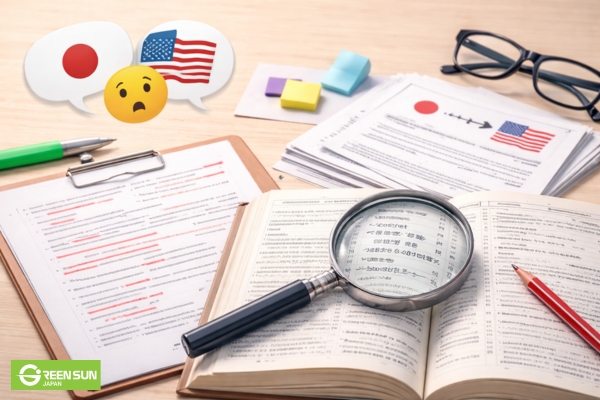
Even a small translation mistake can damage your entire brand image. When a message is mistranslated, customers do not see it as a “translation error” — they see it as a sign that your brand is unprofessional or lacks understanding of local culture.
In a globalized market, translation is not merely about converting language; it is a key part of brand communication. Even a minor translation error can undermine customer trust, influence buying decisions, and weaken your brand reputation.
2. Translation Is More Than Words — It’s Part of Your Global Brand Strategy
Many businesses still see translation as a simple “language conversion” step. In reality, it is a critical part of a multilingual branding strategy. Translation, localization, and branding are deeply interconnected — together, they shape how your brand is perceived in each market.
A good translation is not only accurate but also aligned with local culture, user behavior, and marketing context. Without proper localization, companies risk sending the wrong message, creating poor customer experiences, and losing relevance in their target market.
Simply put:
👉 Translation ensures you say it with linguistic accuracy, but localization helps you say it in a way that sells.
That is why global expansion requires more than translation alone. It requires a strategy that aligns language, marketing, and brand positioning across markets.
3. Common Translation Mistakes Businesses Often Make
Even companies with substantial translation budgets still make basic mistakes, and the damage to brand perception is often greater than expected.
3.1. Literal translation (word-for-word translation)
Translating word-for-word without considering context can lead to awkward expressions or even the meaning being incorrect. This is one of the most common mistakes, especially when relying on machine translation or inexperienced translators.
3.2. Context and cultural errors (localization failure)
A message may be linguistically correct but culturally inappropriate, causing confusion or offense. This is a major localization risk for brands entering new markets.
3.3. Incorrect word choice / over-translation
Using unsuitable words or exaggerating meaning can distort the original message, reducing accuracy and credibility.
3.4. Inconsistent terminology (inconsistent branding)
Translating the same concept in different ways creates inconsistency, making the brand appear fragmented and unprofessional.
3.5. Over-reliance on machine translation
AI can assist, but without proper control, content may become unnatural, contextually incorrect, and misaligned with the brand voice.
3.6. Skipping review and QA
Without a proper review process, small errors go unnoticed — and once published, they become major issues.
3.7. Choosing translation services based only on price
Saving costs upfront often leads to bigger losses in brand reputation and marketing performance later.
👉 Key takeaway:
These are not just language errors. They are strategic mistakes that shape how customers perceive your brand.
4. Types of Translation Errors: Objective vs. Subjective Errors
To better understand the impact of translation mistakes, businesses need to distinguish between the two main types of errors: those that are objective and those that are subjective.
👉 Key insight:
- Objective errors make your content wrong
- Subjective errors make your brand feel wrong
In global marketing, subjective errors are often more dangerous because they gradually damage brand perception over time.
5. Impact of Poor Translation on Your Brand
Translation mistakes do not merely result in content errors — they can have a serious impact on brand perception, directly affecting marketing performance and business outcomes.
5.1. Loss of customer trust
When content feels unnatural or incorrect, customers begin to question your brand’s professionalism. Once trust is lost, it is extremely difficult to rebuild.
5.2. Distorted marketing messages
Your original message may be misunderstood or lose its core meaning, making marketing campaigns ineffective.
5.3. Cultural misunderstanding or unintentional offense
Certain translation errors can unintentionally offend local audiences, leading to a public backlash or even a PR crisis — both of which are serious localization risks.
5.4. Negative impact on multilingual SEO
Incorrect keyword translation or lack of localization can hurt search rankings, resulting in decreased traffic.
5.5. Revenue loss and lower conversion rates
If your content fails to persuade or creates confusion, potential customers will not convert — leading to missed sales opportunities.
👉 In short:
A small translation error can trigger a domino effect — from inaccurate content → poor experience → loss of trust → reduced revenue. This is why translation should be treated as part of your brand strategy, not merely as a technical task.
5.6. How Translation Mistakes Affect Multilingual SEO
Many businesses focus only on translating content while ignoring SEO, which leads to lost international traffic.
Common mistakes include:
- Incorrect keyword translation → local search intent not met
- No keyword research for each target market
- Unnatural translated content → lower dwell time, higher bounce rate
- Poorly optimized metadata (titles, descriptions) in the target language
👉 Result:
Even with translated content, your website will still fail to rank on search engine results in international markets.
👉 Therefore:
Translation, localization, and SEO need to work together if you want to protect your brand and perform well in international markets.
6. Case analysis (Action → Result)
To better understand the impact of translation mistakes on brand perception, let’s look at a few scenarios through the lens of Action → Result. This is how businesses should evaluate both the effectiveness and risks of translation.
Case 1: Incorrect slogan translation (Literal translation)
Action:
The slogan is translated word-for-word without adapting to cultural context.
Result:
The message becomes confusing or even negative → customers react negatively → direct damage to brand image.
Case 2: Localization failure in new markets
Action:
Marketing content is reused from the original market without adapting to local behavior and culture.
Result:
The message fails to resonate → campaign underperforms → higher localization risks and wasted marketing budget.
Case 3: Inconsistent content across channels
Action:
Websites, ads, and sales materials use inconsistent terminology and messaging.
Result:
Fragmented customer experience → reduced trust → negative impact on translation and brand reputation.
Case 4: Over-reliance on machine translation
Action:
AI is used for fast translation without proper editing or review.
Result:
Unnatural, contextually incorrect content → poor user experience → customer drop-off.
👉 Key takeaway:
A poor decision in translation (Action) can lead to serious consequences for brand and revenue (Result). That is why translation should not be evaluated on accuracy alone, but on its real impact on business performance and brand perception.
7. Overlooked but Highly Dangerous Fact
Most businesses only notice translation mistakes after the damage has already been done. However, the biggest risks often lie in the “invisible” aspects of localization — where localization brand risk quietly accumulates.
7.1. Lack of a clear localization strategy
Translating content in isolation, without aligning it with brand positioning, leads to inconsistent messaging across markets.
7.2. Ignoring regional differences
Even within the same language, vocabulary, behavior, and cultural nuances vary. Overlooking this can result in messaging that feels “off” or disconnected.
7.3. Neglecting multi-device experiences (mobile interfaces and UX)
Translated content that overflows mobile interfaces or disrupts UI design can harm user experience, especially in multilingual environments.
7.4. Skipping legal and cultural checks
Some content may violate local regulations or cultural norms, creating legal risks or potential PR crises.
7.5. Lack of a translation management system
Without structured processes (term bases, style guides, QA), content becomes inconsistent and difficult to control over time.
👉 Key insight:
These risks do not cause immediate damage, but over time they weaken your multilingual branding strategy and reduce your competitive advantage in global markets.
That is why avoiding translation errors is not just about fixing content — it’s about controlling the entire localization system.
7.6. Translation as Part of a Global Marketing Strategy
In a global competitive landscape, translation is no longer a support function — it is a core part of your marketing strategy.
An effective multilingual branding strategy requires:
- Consistent messaging across all markets
- Content tailored to each region
- Integration of translation, localization, and SEO
- Unified and consistent brand experience
👉 Successful businesses do not merely translate content — they adapt it strategically for each market to protect and strengthen their translation and brand reputation.
8. How to Avoid Translation Mistakes and Protect Your Brand
To minimize translation mistakes, businesses need to approach translation as a strategic function by ensuring they do the following:
- Build a clear multilingual branding strategy
- Standardize terminology and brand voice
- Integrate translation, localization, and SEO
- Apply multi-layer QA processes
- Work with professional translation partners
👉 Accuracy alone is not enough — translation must be done strategically to support business goals and protect your translation and brand reputation.
9. The Role of Professional Translation in Marketing Growth
High-quality translation not only reduces risks but also creates the following competitive advantages:
- Increased traffic through multilingual SEO
- Improved user experience → boost conversion rates
- Consistent global brand image
👉 Strong translation supports better marketing performance, stronger brand consistency, and sustainable global growth.
10. Conclusion
Translation mistakes can quietly damage your brand, while effective translation helps you grow with confidence in global markets.
👉 Instead of treating translation as a cost, businesses should view it as a strategic investment to protect and grow their brand sustainably.
FAQ
1. Do translation mistakes really affect your brand?
Yes, significantly. Translation mistakes can distort your message, reduce credibility, and directly impact customer trust.
2. What is the difference between translation and localization?
Translation converts language, while localization adapts content to fit local culture, behavior, and market expectations — reducing localization risks.
3. Why shouldn’t you rely solely on machine translation?
Machine translation is fast, but it often misses context, natural phrasing, and brand tone, which can damage your brand reputation.
4. How can businesses avoid localization risks?
Businesses can reduce localization risks by building a clear strategy, implementing strong QA processes, and working with experienced translation partners.
5. What are the most common translation mistakes in marketing?
The most common translation mistakes include word-for-word translation, cultural misinterpretation, inconsistent terminology, and over-reliance on machine translation.
6. Does localization affect brand reputation?
Yes. Effective localization improves market fit, while poor localization can lead to misunderstandings, lost trust, and long-term brand damage.

Are you expanding into international markets but worried that translation mistakes might damage your brand? You can trust Green Sun Japan to help you find solutions. With our team of professional linguists and deep expertise in localization, multilingual SEO, and branding, we do not merely help you translate accurately — we ensure your brand message is delivered effectively in every market.
👉 Do not let small mistakes cost you big opportunities — partner with Green Sun Japan to build a global brand that is professional, consistent, and trustworthy from day one, while protecting your translation and brand reputation.