

Japanese Document Translation for Japan–Singapore Operations: 4 High-Risk Files That Need Extra Review
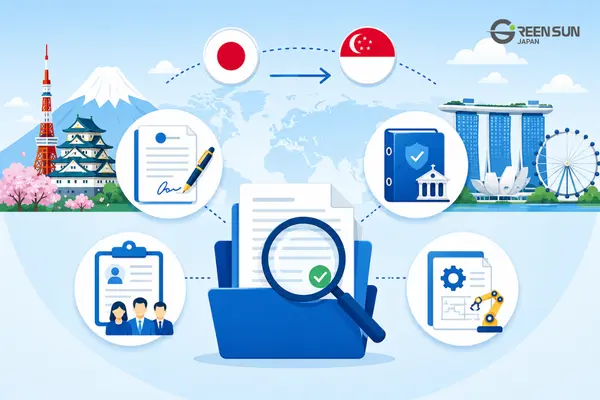
For Japan–Singapore operations, the four types of Japanese documents that typically require the most careful review are contracts, corporate and compliance documents, HR materials, and technical documents. Errors in meaning, inconsistent terminology, or damaged formatting can directly affect legal rights and obligations, internal procedures, employment matters, or day-to-day operations. Before a document is signed, submitted, or put into use in Singapore, businesses should therefore determine the appropriate level of review for each file. This article explains why these four document categories carry higher risks and what should be checked to ensure that each translation is accurate, consistent, and fit for its intended purpose.
📌 Key Takeaways / Direct Answer:
In Japan–Singapore cross-border operations, four core business document categories require extra multi-tiered review prior to execution, submission, or operational deployment: Contracts & Agreements, Corporate & Compliance Records, HR Materials, and Technical Specifications. Generic or unverified machine translation in these high-risk files introduces severe legal, regulatory, and operational liabilities—such as misinterpreting contractual obligations (“shall” vs. “may”), skewing notice periods (30 days vs. 1 month), or converting technical limits incorrectly (e.g., 80°C to 80°F). To eliminate risk, Japanese enterprises must implement a 6-stage review workflow combining domain-specialized linguists, bilingual sentence-by-sentence verification, official terminology glossaries, and layout formatting controls (DTP). Green Sun Japan provides certified Japanese document translation services tailored to high-risk business files across Japan and Singapore.
Contents
- 1. Which Japanese Business Documents Need Extra Review?
- 2. Contracts and Agreements Require the Highest Level of Review
- 3. Corporate and Compliance Documents Need Exact Entity and Regulatory Terminology
- 4. Employment Contracts and HR Policies Can Affect Employee Rights
- 5. Technical Documents Need Specialist Review and Format Control
- 6. What Should an Extra-Review Translation Process Include?
- Conclusion
- FAQ
1. Which Japanese Business Documents Need Extra Review?
In Japan–Singapore operations, not every document requires the same level of review. Files involving contracts, corporate and compliance matters, HR, or technical content usually need closer scrutiny because translation errors can affect legal obligations, internal procedures, employee rights, or day-to-day operations.
The level of review should be based on the document’s intended use and the potential consequences of any errors. Documents used for signing, submission, employee guidance, or direct operational use often require bilingual comparison, terminology checks, data verification, and formatting review before delivery.
Extra review goes beyond correcting grammar. It also confirms that the translation accurately reflects the meaning of the source document, uses terminology consistently, and preserves critical elements such as dates, clause numbers, tables, and cross-references.
2. Contracts and Agreements Require the Highest Level of Review
Contracts and agreements generally require the highest level of review in Japanese document translation projects because they directly establish the rights, obligations, and liabilities of the parties involved. These documents may include sales agreements, service contracts, distribution agreements, non-disclosure agreements, supplier contracts, licensing agreements, and contract amendments.
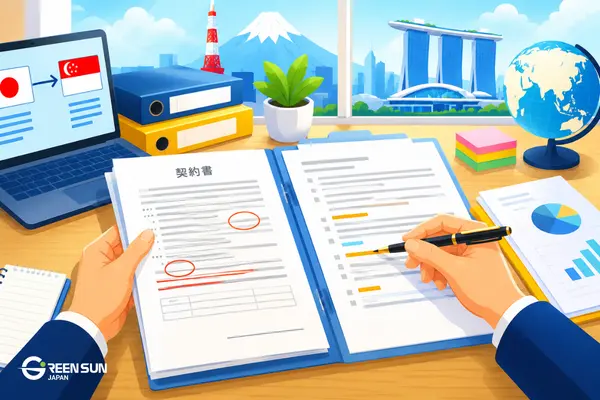
In Japanese contract translation, the reviewer must examine more than the wording alone. The review should also cover the level of legal obligation, defined terms, payment conditions, deadlines, exceptions, and references between clauses. A translation may be accurate at the vocabulary level but still create risk if words such as shall, must, or may are used incorrectly, or if a condition limiting liability is omitted. For example, if a Japanese clause grants a party discretion but is translated as a mandatory obligation using shall, that party’s responsibilities may be interpreted more broadly than intended in the source document.
| Content to review | Common risk |
|---|---|
| Rights and obligations | Changing the scope of a party’s commitments |
| Payment and delivery terms | Incorrect amounts, deadlines, or performance conditions |
| Liability and indemnity clauses | Misrepresenting the limits or scope of liability |
| Termination and renewal | Confusing termination dates, renewal periods, or notice requirements |
| Defined terms and cross-references | Inconsistent terminology or references to the wrong clauses |
Additional review helps identify issues involving language, terminology, clause numbering, and document structure before an agreement is signed or sent to a business partner in Singapore. For high-value contracts, documents with multiple appendices, or agreements involving more than one legal jurisdiction, businesses should also consider a separate legal review, as translation review is not a substitute for legal advice.
3. Corporate and Compliance Documents Need Exact Entity and Regulatory Terminology
Corporate records and compliance documents require a high level of accuracy for legal entity names, job titles, registration numbers, and regulatory terminology. This category commonly includes board resolutions, meeting minutes, company registration records, compliance manuals, data protection policies, and internal control procedures.
In Japanese compliance document translation, the reviewer should ensure that obligations, deadlines, and responsible roles are expressed clearly and consistently. Company names, regulatory authorities, and job titles should also match official records rather than being translated differently from one document to another. For example, using a trading name instead of the registered legal entity name in a resolution or compliance report may cause the document to conflict with the company’s official records.
| Content to review | Common risk |
|---|---|
| Legal entity names and job titles | Inconsistency or mismatch with official records |
| Registration numbers, dates, and ownership percentages | Incorrect critical data |
| Names of authorities and regulations | Using unofficial names or identifying the wrong authority |
| Reporting obligations and deadlines | Changing the level of obligation |
For Japanese business document translation, the review process should compare the translation against registration records, approved terminology lists, and related files before the document is submitted or circulated in Singapore.
4. Employment Contracts and HR Policies Can Affect Employee Rights
Employment contracts and HR policies can directly affect employee rights, responsibilities, and how working conditions are understood. This category commonly includes employment agreements, employee handbooks, leave and benefits policies, compensation documents, and related HR materials.
In HR policy translation, the reviewer should pay close attention to salary, working hours, leave entitlements, probation periods, and resignation notice requirements. For example, translating a 30-day notice period as one month may lead employees and HR teams to calculate the final working day differently. Terminology should also remain consistent across contracts, handbooks, and related policies to avoid conflicting interpretations.
| Content to review | Common risk |
|---|---|
| Salary, allowances, and bonuses | Incorrect amounts, conditions, or payment dates |
| Working hours and overtime | Misunderstanding of schedules or employee entitlements |
| Leave and benefits | Incorrect conditions or scope of application |
| Disciplinary provisions | Changing an employee’s obligations or the severity of disciplinary action |
| Consistency across documents | Conflicting terms between contracts and policies |
For Japanese contract and policy translation, the review process should compare all related files and confirm approved HR terminology before the documents are issued to employees in Singapore.
5. Technical Documents Need Specialist Review and Format Control
Technical documents often require review by someone with subject-matter expertise because translation errors can affect operations, product quality, or safety. This category includes operating manuals, standard operating procedures, technical specifications, safety instructions, inspection reports, and product data sheets.
In technical document translation, the reviewer should check terminology, numerical data, and document structure at the same time. Component names, product codes, units of measurement, operating limits, and warnings should remain consistent with the equipment and any relevant reference materials.
| Content to review | Common risk |
|---|---|
| Specifications and units of measurement | Incorrect values, units, or decimal points |
| Component names and product codes | Identifying the wrong part or creating inconsistencies with internal systems |
| Safety warnings | Reducing the severity or urgency of a warning |
| Operating steps | Incorrect sequencing or omitted actions |
| Tables, diagrams, and callouts | Text that no longer matches the illustration |
| Formatting and numbering | Broken references or reduced usability |
For example, if an operating limit of 80°C is translated or entered incorrectly as 80°F, the operator may apply a threshold that is significantly different from the source document. Similarly, a misplaced callout in a diagram may cause the reader to identify the wrong component.
Technical translations should therefore be checked against approved glossaries, drawings, equipment interfaces, and related product documentation before delivery. A language-only review is often insufficient for files used directly in manufacturing, maintenance, or operator training.
6. What Should an Extra-Review Translation Process Include?
An enhanced review process should begin by identifying the document’s intended use, recipient, and risk level. A file intended for signing, official submission, or operational use requires more thorough review than one used only for internal reference.
| Process Stage | Detailed Review Activities | Risk-Reduction Impact |
|---|---|---|
| 1. Document classification and risk assessment | Identify the intended use, such as signing, official submission, or internal circulation, and determine the file’s risk level. | Ensures that the appropriate review workflow and qualified personnel are selected from the outset. |
| 2. Source material standardization | Confirm official legal entity names, registration numbers, internal terminology, and reference materials. | Maintains consistency with the company’s existing records in Singapore. |
| 3. Specialist translation | Assign the document to a translator with the relevant subject-matter expertise. | Supports an accurate understanding of the professional context and applicable local legal requirements. |
| 4. Bilingual review | Conduct an independent review of sentence meaning, figures, dates, and contractual provisions. | Eliminates meaning discrepancies and quantitative data errors. |
| 5. Formatting control | Review tables, diagrams, callouts, clause numbering, and cross-references throughout the file. | Preserves the structure and presentation of the source document. |
| 6. Final quality assurance | Perform a comprehensive final check before delivering the official file to the client. | Ensures that the document is ready for regulatory submission or signing with a business partner. |
Businesses should provide editable source files, previous translations, approved glossaries, and information about the document’s intended use. These materials help the Japanese document translation provider select the appropriate workflow, reviewer, and level of quality control for each file.
Conclusion
In Japan–Singapore operations, contracts, corporate and compliance documents, HR materials, and technical documents are the categories that typically require the most careful review. A well-structured review process helps reduce the risk of legal misinterpretation, incorrect terminology, data discrepancies, and formatting errors before a document is signed, submitted, or put into use.
A Japanese document translation provider should assess the risk level of each file at the outset rather than applying the same workflow to every document. This approach helps ensure that the final translation is accurate, consistent, and suitable for its intended use in Singapore.
FAQ
1. Does every document require specialist review?
No. The level of review should depend on the document’s intended use and the potential consequences of any errors. Documents used for signing, official submission, training, or operational purposes usually require more in-depth review than materials intended only for internal reference.
2. What should a business provide before translation begins?
Businesses should provide editable source files, previous translations, approved glossaries, official legal entity names, and information about the intended recipient or purpose of the document.
3. Should machine translation be used for high-risk documents?
Machine translation may be useful for producing a draft, but it should not be the final review step. Contracts, compliance documents, HR materials, and technical documents still need to be checked by a professional translator for meaning, terminology, numerical accuracy, and formatting.

Need Reliable Japanese Document Translation for Your Singapore Operations?Let Green Sun Japan help you manage high-risk Japanese documents before they are signed, submitted, or put into use in Singapore.
Three reasons businesses choose us:
✅ The right specialist for each document type
Every project is assigned to a translator or reviewer with relevant experience in contracts, compliance, HR, or technical documentation.
✅ Thorough review of meaning, terminology, and formatting
We go beyond language checks by verifying legal entity names, figures, clauses, references, tables, and overall file structure.
✅ A review process tailored to the document’s intended use in Singapore
The level of review is determined by whether the document will be signed, officially submitted, issued to employees, or used in day-to-day operations.
Contact us today for a document risk assessment and a translation workflow tailored to each file.