

Japanese Medical Translation Services in Singapore: A Guide for Healthcare Companies Expanding into the Market
Singapore is a key market for Japanese companies in the healthcare, pharmaceutical, medical device, and clinical research sectors. However, expanding into this market requires more than high-quality products. Companies also need an organized documentation system that is accurate, consistent, and suitable for an international healthcare environment.
In practice, many companies do not prioritize medical translation until a project is already underway. This often results in inconsistent terminology, repeated revisions, and communication delays with hospitals, distributors, research organizations, and local business partners.
Professional Japanese medical translation services help companies establish a consistent documentation framework from the beginning. They support clear communication across technical, clinical, regulatory, training, and marketing materials while reducing unnecessary revisions throughout the expansion process.
This guide explains why professional Japanese medical translation services are essential for successful market entry into Singapore, which types of medical documents typically require translation, and how a structured Quality Assurance (QA) process helps ensure accuracy, consistency, and reliability throughout the translation workflow.
📌 Key Takeaways / Direct Answer:
- Strategic Role of Medical Translation: For Japanese healthcare, pharmaceutical, medical device, and CRO companies expanding into Singapore, professional medical translation services go beyond simple language conversion. They establish a standardized documentation framework required for clinical communication, regulatory approvals, and business collaboration.
- Core Document Categories: High-risk files requiring specialized translation include Medical Device IFUs and specifications, Pharmaceutical SOPs and QA/QC manuals, Clinical Study Protocols and Informed Consent Forms (ICF), and market entry commercial materials.
- Critical Risks of Translation Errors: Inaccurate translations in safety warnings, dosage units, or operating instructions directly compromise patient safety, trigger regulatory rejections, and delay product launch timelines.
- Multi-Tier Quality Assurance: To guarantee zero ambiguity, reputable translation providers utilize a 5-step QA workflow combining domain-specialized medical translators, approved glossaries, Translation Memory (TM) systems, and independent editing. Green Sun Japan provides certified Japanese medical translation services tailored to the Singapore healthcare market.
1. Why Do Japanese Companies Need Professional Medical Translation Services in Singapore?
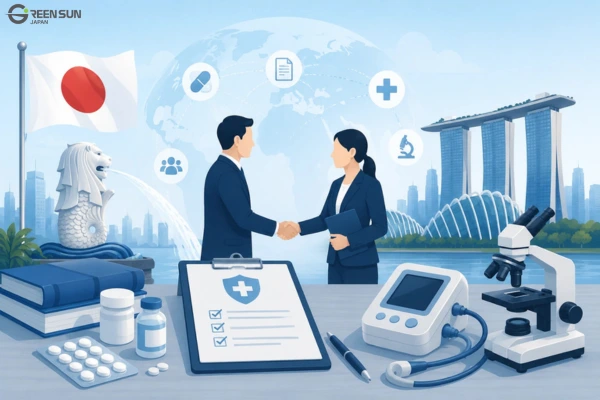
Singapore is one of Southeast Asia’s leading healthcare and biomedical hubs. Japanese companies operating in the market frequently work with hospitals, research institutes, pharmaceutical companies, medical device manufacturers, and Clinical Research Organizations (CROs).
In this environment, medical translation involves more than converting content from one language to another. It helps companies create accurate, consistent documentation that can be clearly understood by a wide range of stakeholders.
High-quality Japanese medical translation services help companies:
・Ensure the accurate use of medical and technical terminology.
・Maintain consistency across technical, regulatory, training, and marketing materials.
・Communicate effectively with hospitals, distributors, and research partners.
・Reduce review time and unnecessary document revisions.
・Strengthen their professional image throughout the market entry process.
1.1. Consistent Documentation Improves Collaboration
During market entry, the same information often appears in multiple documents, including technical documentation, Standard Operating Procedures (SOPs), websites, brochures, and clinical communication materials.
When terminology or wording differs from one document to another, companies may need to spend additional time reviewing, revising, and clarifying information with business partners. These inconsistencies can also create confusion among departments and delay document approval.
Professional healthcare translation in Singapore typically relies on a glossary, Translation Memory (TM), and style guide to maintain consistency. These resources standardize terminology across departments, document types, and content versions, making collaboration more efficient throughout the product lifecycle.
1.2. Translation Errors Can Affect Patient Safety and Project Timelines
In the healthcare industry, translation errors are more than language issues. Incorrect or unclear wording can change the meaning of instructions for use, safety warnings, clinical information, or technical specifications.
Common medical translation errors include:
・Incorrectly translated device instructions for use.
・Inconsistent terminology or product names.
・Incorrect units of measurement or technical symbols.
・Inaccurately worded safety warnings.
・Misinterpreted terminology in clinical research documents.
These issues can delay projects, disrupt clinical communication, and reduce the credibility of medical documentation. For materials such as Instructions for Use (IFU) and safety information, accurate translation also plays an important role in supporting patient safety.
· Learn how to reduce risk in Japanese medical translation projects
· Understand key requirements for reliable Japanese legal translation
· See what influences Japanese translation pricing and turnaround
· Explore legal translation considerations for Japan-Singapore business
2. Types of Documents Japanese Companies Commonly Translate for the Singapore Market
Medical translation projects generally fall into four core B2B categories:
| Document Category | Specific Document Types | Critical Translation & Business Requirement |
|---|---|---|
| Medical Device Documentation | Instructions for Use (IFU), user manuals, technical specs, safety sheets, catalogs. | Requires precise technical terminology, clear operating steps, and exact safety warnings. |
| Pharmaceutical & QA/QC | Standard Operating Procedures (SOPs), QA/QC manuals, package inserts, pharmacovigilance files. | Demands absolute terminology consistency across Regulatory Affairs, QA, and Manufacturing. |
| Clinical Research & Materials | Clinical protocols, Investigator’s Brochures, Informed Consent Forms (ICF), study reports. | Must maintain scientific precision while ensuring ICFs remain clear and readable for patients. |
| Market Entry & Commercial | Corporate websites, product brochures, training guides, distributor materials, hospital FAQs. | Requires commercial tone while staying 100% aligned with core technical and clinical terminology. |
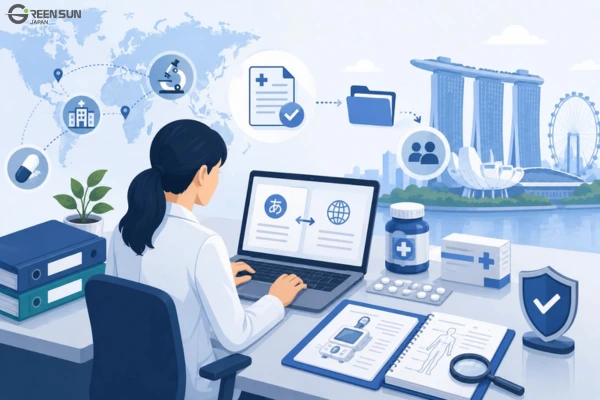
3. How Does a Quality Assurance Process Support High-Quality Medical Translation?
In the healthcare industry, translation quality depends on a clearly defined Quality Assurance (QA) workflow designed to eliminate risk.
| QA Process Stage | Detailed Activity | Risk-Reduction Impact |
|---|---|---|
| 1. Document Analysis & Terminology | Analyze subject matter, target audience, TM resources, and create specialized glossaries. | Establishes approved terminology baseline before translation begins. |
| 2. Specialist Assignment | Match files with linguists holding specific experience in Pharma, Devices, or Clinical trials. | Eliminates contextual misunderstandings and incorrect industry phrasing. |
| 3. Glossary & TM Execution | Apply Translation Memory tools, brand style guides, and strict unit/number rules. | Guarantees 100% terminology consistency across multiple document versions. |
| 4. Independent Editing & Review | Conduct a full bilingual review covering medical terms, figures, safety warnings, and logic. | Uncovers omissions, mistranslations, and quantitative discrepancies. |
| 5. Final Pre-Delivery QA | Verify layout, check untranslated text, and update TM/glossaries for future projects. | Ensures files are fully formatted and ready for official submission or clinical use. |
4. Conclusion
For Japanese companies in the healthcare, pharmaceutical, medical device, and clinical research sectors, professional medical translation is more than a language conversion task. It provides the documentation foundation needed for successful market entry and long-term collaboration with hospitals, distributors, research organizations, and other business partners in Singapore.
A documentation system built on standardized terminology, supported by a structured Quality Assurance process, and maintained consistently across all materials can improve clinical communication, reduce review time, and strengthen the credibility of technical and medical content.
By investing in professional Japanese medical translation services from the beginning, companies can minimize avoidable revisions, support more efficient collaboration, and establish a stronger presence in the Singapore market.
5. FAQ
1. Do Japanese companies expanding into Singapore need professional medical translation?
Yes. For companies operating in the healthcare, pharmaceutical, medical device, or clinical research sectors, accurate and consistent medical translation supports effective communication and collaboration with hospitals, distributors, research organizations, and other business partners in Singapore.
2. What types of documents typically require translation for the Singapore market?
Commonly translated documents include medical device documentation, Instructions for Use, Standard Operating Procedures, pharmaceutical materials, clinical research documents, training materials, brochures, websites, and clinical communication content.
3. Why is Quality Assurance important in medical translation?
A structured Quality Assurance process helps identify and correct issues involving terminology, numerical data, safety warnings, formatting, and document consistency before the materials are delivered or used.
This reduces the risk of miscommunication and improves the overall accuracy and reliability of medical documentation.
4. What are the benefits of using a glossary and Translation Memory?
A glossary and Translation Memory help maintain consistent terminology across multiple documents and versions.
They can also reduce review time, minimize translation inconsistencies, and improve efficiency for long-term translation projects.
5. Does Green Sun provide medical translation services for Japanese companies?
Yes. Green Sun provides Japanese medical translation services for companies in the healthcare, pharmaceutical, medical device, and clinical research industries.
Our services are supported by a multi-step Quality Assurance process designed to ensure accuracy, consistency, and language that is appropriate for each document’s intended purpose.

Green Sun supports Japanese companies with professional medical translation services for Singapore. We help healthcare, pharmaceutical, medical device, and clinical research organizations prepare accurate, consistent documentation for successful market entry.
Our services cover terminology standardization, quality assurance, and documentation consistency throughout the product lifecycle.
Our services include:
- Medical translation for healthcare, pharmaceutical, medical device, and clinical research documentation.
- Development and maintenance of glossaries, Translation Memory, and style guides to ensure consistent terminology across all documents.
- Multi-step Quality Assurance processes that verify terminology, numerical data, safety information, and technical content before delivery.
- Translation support for clinical communication materials, training content, websites, and other documents required for market entry.
Explore Green Sun’s Japanese translation services to learn how we support businesses with accurate, consistent, and industry-specific translations, or contact our team to discuss a medical translation solution tailored to your needs.