

Korean Legal Translation: Contracts, Compliance, and Disputes
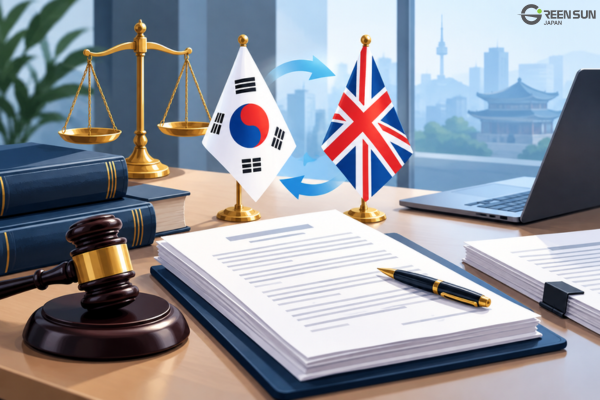
Korean legal translation is not simply a matter of converting one language into another. For contracts, non-disclosure agreements, compliance documents, or dispute records, a small change in wording can affect how rights, obligations, responsibilities, or applicable conditions are interpreted.
Businesses should match the translation and review process to each document’s intended use and risk level, then check terminology and related clauses for consistency.
- Korean contract translation needs to preserve the exact meaning of clauses, definitions, and exceptions.
- Korean compliance translation needs to maintain consistent terminology across policies, procedures, and forms.
- Non-disclosure agreements, corporate records, and dispute-related documents often require a higher level of review than internal reference materials.
- The level of review should be based on the intended use, complexity, and consequences of mistranslation.
- When it is necessary to assess whether clauses comply with applicable law, a separate legal review is required.
Contents
- 1. When Do Businesses Need Korean Legal Translation?
- 2. Common Types of Documents That Require Korean Legal Translation
- 3. Main Risks in Korean Legal Translation
- 4. Required Level of Review by Document Type
- 5. How to Choose a Korean Legal Translation Provider
- 6. Conclusion
- 7. Frequently Asked Questions
- 7.1. What Documents Commonly Require Korean Legal Translation?
- 7.2. Does Korean Contract Translation Require Review by Someone with Legal Expertise?
- 7.3. How Is Korean Legal Translation Different from General Korean Document Translation?
- 7.4. What Should Be Checked Before Translating Korean Compliance Documents?
- 7.5. How Should Dispute-Related Documents Be Kept Confidential?
1. When Do Businesses Need Korean Legal Translation?
Not every Korean document requires an in-depth legal translation process. The key difference is the potential impact if the content is misunderstood.
1.1. When the Document Establishes Rights and Obligations
Sales contracts, service agreements, distribution agreements, non-disclosure agreements, and licensing agreements often define the specific responsibilities of each party.
In these documents, the translator needs to identify the relationships among obligations, conditions, exceptions, and deadlines rather than handling each sentence in isolation. Korean contract translation therefore often requires a stricter level of review than general business documents.
1.2. When the Document Is Used for Compliance or Auditing
Businesses operating in multiple markets often need to translate internal policies and procedures so employees, suppliers, or partners can apply them consistently.
For Korean compliance translation, the focus is not only on the accuracy of each document but also on terminology consistency across codes of conduct, policies, forms, and internal guidelines.
1.3. When the Document Is Related to Disputes
Emails, breach notices, meeting minutes, demand letters, or documents supporting a dispute need to be handled carefully because the translation may be used to assess the course of the matter.
In these cases, the translation needs to preserve the tone of the source document accurately. Language expressing a possibility should not be turned into a definite commitment, and ambiguous wording should not be clarified arbitrarily without sufficient basis.
2. Common Types of Documents That Require Korean Legal Translation
The scope of Korean legal translation is broad. For corporate clients, the level of risk and review requirements vary depending on the type of document, its intended use, and the consequences if the content is misinterpreted.
| Document Type | Main Translation Risks | Key Points to Control | Level of Review |
|---|---|---|---|
| Contracts and commercial agreements | Incorrect rendering of the parties’ rights, obligations, deadlines, conditions, or liabilities | Maintain consistency in defined terms; check the scope of services, payment, confidentiality, indemnification, limitation of liability, termination, and dispute resolution | High |
| Non-disclosure agreements | Incorrect scope of confidential information, authorized recipients, exceptions, or confidentiality periods | Maintain consistent terms such as disclosing party, receiving party, affiliates, and representatives; clearly identify the prevailing language version, if applicable | High |
| Compliance documents and internal policies | Inconsistent terminology or requirements across multiple documents | Use an approved terminology list for codes of conduct, anti-bribery policies, whistleblowing procedures, employee guidelines, and related documents | High |
| Corporate records | Incorrect legal entity names, titles, dates, or governance content | Cross-check official company names, titles, resolutions, meeting minutes, articles of association, and registration information | Depends on the intended use |
| Dispute-sensitive documents | Distortion of the content, tone, or degree of certainty in the source document | Remain faithful to emails, correspondence, minutes, breach notices, and supporting evidence; do not arbitrarily clarify ambiguous content or turn a possibility into a definite commitment | Very high |
Especially for Korean contract translation and dispute-related documents, the review process should not stop at grammar checks. The reviewer needs to cross-check terminology, definitions, and the relationships among different sections to reduce the risk of the translation changing the interpretation of the source document.
For Korean compliance translation, greater emphasis is placed on consistency across documents. When the same concept appears in policies, forms, and internal guidelines, businesses should maintain a consistent translation throughout the entire set of documents.
3. Main Risks in Korean Legal Translation
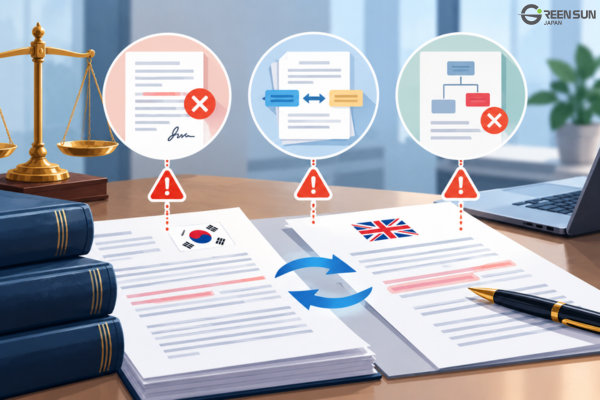
A legal translation may be accurate in terms of vocabulary but still pose risks if it fails to preserve the meaning, scope of application, and relationships among clauses. The three main risks businesses need to consider include:
| Risk | Common Issues | Consequences | Control Measures |
|---|---|---|---|
| Incorrect meaning of clauses | A clause is translated in isolation without being cross-checked against conditions, exceptions, or related content in other sections | The scope of rights, obligations, or liabilities may be interpreted more broadly or narrowly than in the source document | Read and cross-check the document based on its overall structure, and review related clauses and cross-references |
| Inconsistent terminology | The same concept, legal entity name, or defined term is translated in different ways | Readers may interpret a single concept as multiple separate concepts, making the document difficult to apply | Create a terminology list that includes source terms, approved translations, legal entity names, titles, and terms that need to remain consistent |
| Incorrect scope of obligations or level of commitment | Expressions such as “has the right to,” “is obligated to,” “may,” “only if,” or “unless” are changed inappropriately | This may alter the level of obligation, applicable conditions, or interpretation of a party’s commitment | Carefully check language expressing rights, obligations, conditions, exceptions, and degrees of certainty, particularly in contracts and dispute-related documents |
In Korean legal translation, consistency and accuracy of meaning are often more important than varied or polished wording. Translators need to prioritize preserving the interpretation of the source document, particularly when the content directly relates to the rights, obligations, or liabilities of the parties.
4. Required Level of Review by Document Type
Not all legal documents require the same level of review. Businesses should determine the depth of review based on the intended use, the complexity of the content, and the consequences if the translation contains errors.
| Level of Review | When Appropriate | Review Focus | Common Document Types |
|---|---|---|---|
| Linguistic review | Documents used for internal reference that have a low level of risk and do not directly establish rights or obligations | Compare against the source document and check accuracy, readability, and consistency | Internal reference materials and certain low-risk corporate records |
| Review by someone with legal experience | Documents containing extensive specialized terminology, defined terms, complex clauses, or high consistency requirements | Check terminology, definitions, the wording of rights and obligations, and the relationships among clauses | Contracts, non-disclosure agreements, compliance documents, internal policies, and certain corporate records |
| Legal review | When it is necessary to assess not only the accuracy of the translation but also whether the clauses are appropriate under applicable law or the level of legal risk | Assess enforceability, application, risks, and whether the clauses may need to be revised | High-value contracts, documents used in disputes, or content involving significant legal risk |
A clear distinction should be made between translation review and legal review. A translator or editor can check the accuracy, consistency, and wording of the translation, but assessing whether a clause complies with applicable law falls within the scope of legal expertise.
5. How to Choose a Korean Legal Translation Provider
For legal documents, translation price should not be the only consideration. Businesses need to evaluate professional experience, terminology management capabilities, the review process, and document security practices.
5.1. Experience with the Specific Type of Document
Priority should be given to providers that have handled similar documents, such as contracts, non-disclosure agreements, compliance documents, or dispute records. Relevant experience helps translators understand document structure, terminology, and risk. Review the provider’s Korean translation services and ask for a process suited to the document’s intended use.
5.2. Terminology Management Capabilities
For projects involving multiple documents, the provider should maintain a consistent terminology list across contracts, policies, forms, and related records. A Vietnamese legal translation workflow illustrates how an approved glossary and independent review can support a multilingual document set.
5.3. A Clear Review Process
Businesses should know who reviews the translation and what the scope of the review includes. When content is unclear, the provider should have a process for raising questions or flagging issues for confirmation instead of making assumptions.
5.4. Confidentiality and Document Management
Legal documents often contain sensitive information, so access permissions, file transfer and storage methods, confidentiality obligations, and document retention periods after project completion should be clearly defined.
For highly sensitive records, confidentiality should be treated as a mandatory part of the translation process.
6. Conclusion
Korean legal translation should be approached according to the risk level of each type of document.
For Korean contract translation, the priority is to preserve the meaning of clauses, definitions, and the relationships among different sections. For Korean compliance translation, the focus is on consistency across multiple policies and procedures. For dispute-related documents, fidelity to the source document, linguistic nuance, and confidentiality need to be controlled more strictly.
Before selecting a service, businesses should clearly determine the intended use, the consequences of mistranslation, and the required level of review. This provides a foundation for building an appropriate translation process rather than applying the same standard to every document.
7. Frequently Asked Questions
7.1. What Documents Commonly Require Korean Legal Translation?
Common documents include contracts, non-disclosure agreements, legal correspondence, compliance documents, internal policies, corporate records, and dispute-related documents. The required level of review depends on the intended use and the consequences if the translation is inaccurate.
7.2. Does Korean Contract Translation Require Review by Someone with Legal Expertise?
Not every contract needs to be reviewed by someone with legal expertise. However, high-value contracts, contracts with complex clauses, or contracts used in negotiations and disputes often require a higher level of review. If the legal appropriateness of the clauses needs to be assessed, an appropriate legal professional should be involved.
7.3. How Is Korean Legal Translation Different from General Korean Document Translation?
General document translation primarily focuses on conveying the content. Korean legal translation requires additional control over the meaning of clauses, defined terms, the scope of rights and obligations, exceptions, and the relationships among different sections of the document.
7.4. What Should Be Checked Before Translating Korean Compliance Documents?
The intended users, current document version, scope of application, and approved terminology system should be identified. If the content is directly related to legal requirements or industry-specific regulations, the compliance department or an appropriate specialist should confirm the content before release.
7.5. How Should Dispute-Related Documents Be Kept Confidential?
The process should restrict access based on work-related needs, control file transfer and storage, and require translators and reviewers to comply with confidentiality obligations. For particularly sensitive documents, these requirements should be agreed upon before the documents are transferred.

Green Sun Japan provides specialized translation services for businesses, including contracts, compliance documents, corporate records, and other materials that require a high level of accuracy, terminology consistency, and confidentiality.
Why Choose Green Sun Japan?
- Experience with specialized documents: Contracts, compliance documents, and corporate records.
- Consistent terminology management: Supports projects involving multiple files and related documents.
- Risk-based review process: Helps determine the appropriate level of review for each document.
If your business needs Korean legal translation services, contact Green Sun Japan for a consultation on the translation scope, level of review, and the most suitable approach for each type of document.