

The State of AI Translation in 2026: Neural Networks, Accuracy & Real-World Use Cases
Just a few years ago, when people talked about AI translation, most immediately thought of Google Translate or other basic machine translation tools. By 2026, however, the landscape has changed dramatically.
AI-powered translation is no longer a single standalone technology. It has evolved into an entire ecosystem that includes Neural Machine Translation (NMT), Large Language Models (LLMs), adaptive AI systems, and enterprise-grade AI translation tools built for large-scale multilingual workflows.
The rapid growth of global digital content is forcing businesses to translate more content, faster, and with greater accuracy than ever before. Websites, technical documentation, marketing campaigns, customer support systems, and SaaS products all require continuous localization to stay competitive in international markets.
In this environment, AI translation is no longer an experimental trend — it has become a core part of global business strategy.
At the same time, advances in AI-driven language technology have raised several important questions:
・Is AI translation accurate enough for professional use?
・How much has machine translation accuracy improved in recent years?
・In the debate of AI vs human translation, which approach works best for different business needs?
・Which AI translation tools are most suitable for enterprise workflows?
This article explores the current state of AI translation in 2026, including neural networks, translation accuracy, multilingual business applications, and the evolving relationship between AI systems and human translators.
Contents
- Key Takeaways
- 1. Why AI Translation in 2026 Is Completely Different From the Past
- 2. How Does Neural Machine Translation Work?
- 3. Is AI translation accurate enough for professional use in 2026?
- 4. AI vs Human Translation: Competition or Collaboration?
- 5. How Are AI Translation Tools Used in Real-World Business?
- 6. How Should Businesses Choose AI Translation Tools?
- 7. The Future of AI Translation Beyond 2026
- 8. Conclusion: AI Translation Is Entering a More Mature Stage
- 9. FAQ
Key Takeaways
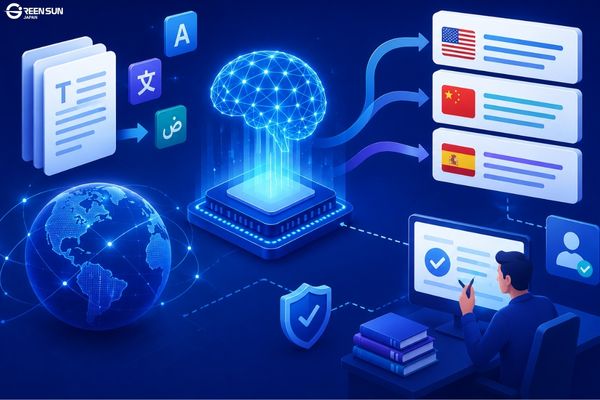
- AI translation in 2026 combines Neural Machine Translation (NMT), Large Language Models (LLMs), and human review workflows.
- Machine translation accuracy is highest for high-resource language pairs such as English–Spanish and English–French.
- AI translation performs well for technical documentation, ecommerce content, and customer support.
- Human translators remain essential for legal, healthcare, branding, and culturally sensitive content.
- The most effective translation workflows combine AI efficiency with human quality control.
1. Why AI Translation in 2026 Is Completely Different From the Past
Earlier machine translation systems primarily translated words or short phrases individually. As a result, translations often sounded rigid, lacked context, and felt unnatural.
Today, advances in Neural Machine Translation have fundamentally changed how AI understands language.
Modern AI translation systems can now:
・understand entire sentences instead of translating word by word
・recognize contextual meaning
・adapt to tone and writing style
・learn from human feedback
・optimize translations for specific industries and business sectors
More importantly, businesses are no longer searching for a single “best translation tool.” Instead, they are building complete localization workflows that combine multiple technologies, including:
・Neural MT
・LLM-based translation
・Translation Memory
・human post-editing
・adaptive translation systems
This shift is exactly why AI translation has become far more strategic than it was in the past.
2. How Does Neural Machine Translation Work?
2.1 What Are Neural Networks?
Neural networks are AI models designed to simulate how the human brain processes information. They learn from millions of bilingual sentence pairs to understand:
・language structure
・grammar
・nuance and tone
・relationships between words
In translation, neural networks allow AI systems not only to translate words, but also to interpret meaning and context more effectively.
2.2 Why Is Neural Machine Translation More Accurate?
Unlike older translation systems, Neural Machine Translation processes entire sentences at once rather than translating word by word.
This allows AI systems to:
・understand context more accurately
・reduce grammatical errors
・produce more natural-sounding translations
・handle idioms and expressions more effectively
For example, the English word “bank” can refer to either:
・a financial institution
・the side of a river
NMT analyzes the full sentence to determine the correct meaning instead of relying on literal word-for-word translation.
This is one of the main reasons machine translation accuracy has improved so dramatically over the past few years.
2.3 How Transformer Models and Large Language Models Are Changing AI Translation
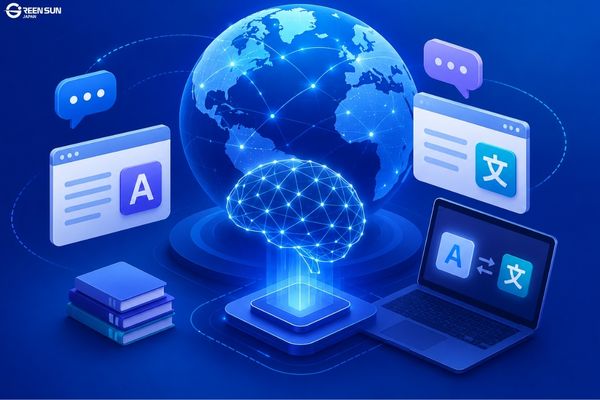
The emergence of transformer models and Large Language Models has pushed AI translation to an entirely new level.
Modern AI translation systems can now:
・adjust tone and writing style
・rewrite sentences more naturally
・translate long-form content
・support multiple languages simultaneously
・optimize translations for specific industries
However, LLM-based translation is not always fully reliable. These systems can sometimes:
・misinterpret the original meaning
・omit important terminology
・generate text that sounds natural but is factually inaccurate
Because of this, many global companies now combine multiple technologies within their translation workflows:
・NMT for translation accuracy
・LLMs for natural fluency
・human review for quality control
As neural networks and transformer models continue to evolve, machine translation accuracy has improved significantly. Even so, an important question remains:
How accurate is AI translation in real-world business environments today?
3. Is AI translation accurate enough for professional use in 2026?
This is one of the most common questions surrounding AI translation.
Recent machine translation evaluations show that AI translation quality has improved significantly for high-resource language pairs such as English–Spanish, English–French, and English–German. However, accuracy still varies depending on language pair, subject matter, terminology, and the level of human review applied.
Translation quality also depends heavily on several factors, including:
・the language pair
・subject matter expertise
・training data quality
・review and localization workflows
For example:
・technical documentation → AI often performs well when terminology, structure, and context are clearly defined.
・marketing content → AI still struggles with creativity and tone
・legal translation → requires extensive human review
・healthcare content → demands strict linguistic validation and compliance checks
3.1 Where Does AI Translation Still Make Mistakes?
Despite rapid progress, AI translation still faces major limitations in areas such as:
・cultural nuance
・humor
・sarcasm
・emotional storytelling
・brand voice
・legal ambiguity
These are areas where human translators continue to outperform machines.
One well-known example is KFC’s slogan “Finger Lickin’ Good,” which was once translated into Chinese with a meaning closer to “Eat your fingers off.” While the translation may have been technically literal, the emotional tone and brand message were completely lost.
This example highlights an important reality: AI translation may produce grammatically correct language, but it does not always communicate the intended cultural meaning or customer experience.
That is why human review remains essential, especially for marketing, branding, and customer-facing content.
The table below summarizes where AI translation works best and where human review remains essential.
| Content Type | AI Translation Performance | Human Translation Requirement |
|---|---|---|
| Technical Documentation | Excellent | Review Recommended |
| Ecommerce Content | Excellent | Review Recommended |
| Customer Support | Excellent | Review Recommended |
| Knowledge Bases | Excellent | Optional |
| Marketing Content | Moderate | Recommended |
| Branding & Transcreation | Limited | Essential |
| Legal Translation | Limited | Essential |
| Healthcare Content | Limited | Essential |
Common Content Types and AI Translation Performance
4. AI vs Human Translation: Competition or Collaboration?
One question continues to come up:
“Will AI completely replace human translators?”
In 2026, the realistic answer is:
No. AI is unlikely to fully replace human translators, especially for content requiring cultural nuance, legal interpretation, or brand-sensitive language.
Instead, the industry is moving toward a Human-in-the-Loop translation model.
4.1 Where Is AI Translation Most Effective?
AI translation is now highly effective for:
・technical documentation
・ecommerce product descriptions
・support content
・multilingual knowledge bases
・repetitive enterprise content
These content types typically involve:
・clear structure
・repeated terminology
・limited emotional nuance
In these situations, AI translation tools help businesses:
・reduce translation costs
・increase turnaround speed
・scale multilingual content production
4.2 When Does Human Translation Still Perform Better?
Human translators still hold a major advantage in areas such as:
・transcreation
・branding
・storytelling
・legal interpretation
・culturally sensitive content
This is especially important in marketing localization, where translating the words correctly is not enough.
The content must also:
・fit the target culture
・create the right emotional impact
・preserve brand tone
・drive conversions
That is why AI vs human translation is no longer a direct competition.
In 2026, the most effective approach is collaboration between AI technology and human linguistic expertise.
5. How Are AI Translation Tools Used in Real-World Business?
5.1 Ecommerce and Product Localization
Global ecommerce platforms are using AI translation to:
・translate product descriptions
・optimize multilingual marketplaces
・localize product catalogs
・support international customers
As a result, businesses can expand into new markets at a much lower cost.
5.2 Customer Support and Real-Time Translation
Real-time translation is becoming increasingly important for global customer support, live chat, and multilingual meetings.
Modern AI translation tools can:
・translate live chat
・support voice-call translation
・assist hybrid meetings
・automatically translate support tickets
This allows global businesses to provide 24/7 support without relying on massive multilingual support teams.
5.3 SaaS, Software, and Technical Documentation
SaaS companies now depend heavily on:
・localization workflows
・multilingual UI
・technical translation automation
Neural Machine Translation is especially effective for:
・API documentation
・product manuals
・onboarding guides
・help center articles
5.4 Healthcare, Legal, and Highly Regulated Industries
These industries require extremely high machine translation accuracy.
AI can help accelerate the translation process, but:
・compliance review
・terminology validation
・human QA
are still essential.
From ecommerce to healthcare, AI translation is becoming a critical part of global business infrastructure. However, achieving reliable results still depends on selecting the right AI translation tools for each specific use case.
6. How Should Businesses Choose AI Translation Tools?
Not all AI translation tools are created equal.
A strong enterprise translation platform should include:
・glossary management
・translation memory
・API integration
・security compliance
・adaptive learning
・workflow automation
・human review support
Another important trend is AI orchestration.
Instead of relying on a single model, businesses are increasingly combining multiple AI systems for different content types and translation requirements.
7. The Future of AI Translation Beyond 2026
Over the next several years, AI translation will continue evolving toward:
・multimodal translation
・speech-to-speech translation
・AR translation
・personalized translation
・adaptive enterprise AI
Future systems will be able to:
・understand deeper context
・learn from brand guidelines
・adapt to enterprise workflows
・combine real-time AI with human feedback
However, even as the technology advances, human expertise will remain essential for:
・quality control
・cultural adaptation
・brand communication
・compliance-sensitive translation
8. Conclusion: AI Translation Is Entering a More Mature Stage
AI translation in 2026 is no longer just “automatic translation.” It has evolved into a sophisticated technology ecosystem that combines:
・Neural Machine Translation
・Large Language Models
・adaptive AI
・human post-editing
・translation workflow automation
The businesses seeing the greatest success are not necessarily the ones using the most powerful AI.
They are the ones that understand how to:
・choose the right workflow
・combine the right technologies
・maintain translation quality
・use AI without losing human expertise
In the near future, AI vs human translation will no longer be about replacement.
Instead, the focus will be on how AI systems and human translators can work together to create translation workflows that are faster, more accurate, and better aligned with the demands of global business.
Is AI translation accurate enough for professional use in 2026? Yes. AI translation is accurate enough for many business use cases, especially technical documents, ecommerce content, support articles, and SaaS documentation. However, human review is still important for legal, healthcare, marketing, and brand-sensitive content.
How accurate is machine translation in 2026? Machine translation accuracy has improved significantly, especially for high-resource language pairs such as English–Spanish, English–French, and English–German. Still, accuracy depends on the language pair, subject matter, terminology, and review process.
Will AI replace human translators? No, not entirely. AI can speed up translation and reduce costs, but human translators remain essential for cultural nuance, brand voice, legal interpretation, and quality control.
Where is AI translation most useful for businesses? AI translation is most useful for technical documentation, ecommerce product descriptions, customer support content, multilingual knowledge bases, and repetitive enterprise content.
When should businesses use human translation instead of AI? Businesses should use human translation for branding, transcreation, storytelling, legal content, culturally sensitive materials, and marketing localization where emotional impact and conversion matter.
How should businesses choose an AI translation tool? Businesses should choose AI translation tools that support glossary management, translation memory, API integration, security compliance, workflow automation, adaptive learning, and human review.
9. FAQ
1. Is AI translation accurate enough for professional use in 2026?
Yes. AI translation is accurate enough for many business use cases, especially technical documents, ecommerce content, support articles, and SaaS documentation. However, human review is still important for legal, healthcare, marketing, and brand-sensitive content.
2. How accurate is machine translation in 2026?
Machine translation accuracy has improved significantly, especially for high-resource language pairs such as English–Spanish, English–French, and English–German. Still, accuracy depends on the language pair, subject matter, terminology, and review process.
3. Will AI replace human translators?
No, not entirely. AI can speed up translation and reduce costs, but human translators remain essential for cultural nuance, brand voice, legal interpretation, and quality control.
4. Where is AI translation most useful for businesses?
AI translation is most useful for technical documentation, ecommerce product descriptions, customer support content, multilingual knowledge bases, and repetitive enterprise content.
5. When should businesses use human translation instead of AI?
Businesses should use human translation for branding, transcreation, storytelling, legal content, culturally sensitive materials, and marketing localization where emotional impact and conversion matter.
6. How should businesses choose an AI translation tool?
Businesses should choose AI translation tools that support glossary management, translation memory, API integration, security compliance, workflow automation, adaptive learning, and human review.

To improve translation speed, reduce costs, and maximize machine translation accuracy, many businesses are now adopting Machine Translation Post-Editing (MTPE) — a hybrid approach that combines AI translation with professional human linguistic review.
This workflow helps multilingual content remain natural, accurate, and fully aligned with global brand consistency.
If your company is looking to build a more scalable and efficient localization workflow, explore Green Sun Japan’s Machine Translation Post-Editing (MTPE) Service to see how AI-powered translation and human expertise can work together to support better global communication.