

Korean AI Translation: Honorifics, Context, and When to Use MTPE
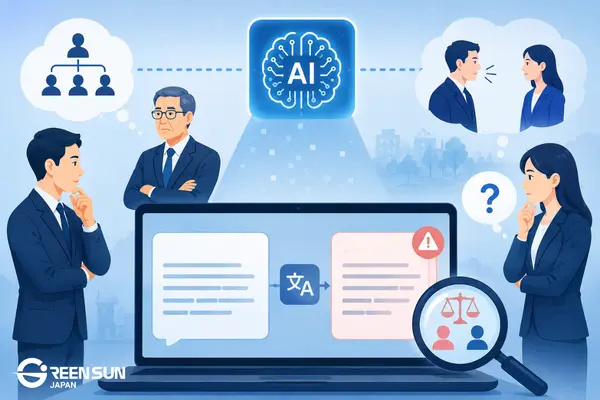
Korean AI translation can produce a useful first draft, but a fluent sentence may still address the wrong person, use an unsuitable speech level, or assign an action to the wrong party. For businesses, these errors can affect customer trust and create confusion about responsibilities. The right workflow depends on the intended audience, available context, and consequences of an error.
In a corporate environment, clearly defining when to use AI translation, when to use machine translation post-editing (MTPE), and when to require full human translation is key to protecting brand reputation.
📌 Key Takeaways / Direct Answer:
- Key Risks in Korean AI Translation: Korean machine translation can mishandle honorifics, confuse polite speech (jondaetmal, 존댓말) with casual speech (banmal, 반말), or misidentify a subject omitted from the source.
- The Root Cause: Choosing a suitable speech level requires information about the speaker, audience, relationship, and situation. Both -습니다/-ㅂ니다 and -요 endings can be polite; a shift between them is not automatically an error, but it should suit the context and style guide.
- The Hybrid Solution (MTPE): Korean MTPE combines an AI-generated draft with bilingual review of meaning, honorifics, brand voice, and terminology. Time and cost savings depend on the quality of the draft and the amount of rewriting required.
- Implementation Recommendations: AI-only output may be suitable for low-risk reference use when confidentiality requirements are met. Customer-facing, legal, safety-related, or persuasive content needs an appropriate level of human review.
Contents
- 1. Why Korean AI Translation Still Struggles with Honorifics and Context
- 2. Common Pitfalls in Korean AI Translation
- 3. When to Use AI, MTPE, or Human Translation?
- 4. Korean MTPE Guide: The AI Translation Post-Editing Workflow
- 5. Frequently Asked Questions (FAQ)
- 6. Conclusion: Choosing the Right Translation Workflow
1. Why Korean AI Translation Still Struggles with Honorifics and Context
Korean AI translation can make vocabulary and grammar errors, but context-dependent choices also need attention. Results vary by system, language direction, domain, and the context supplied:
- Honorifics and Speech Levels Depend on Social Relationships: Korean speech levels depend on the relationship between speaker and listener and the communication setting. When that information is missing, an AI draft may choose an unsuitable level of politeness. Formal polite endings (-습니다/-ㅂ니다) and conversational polite endings (-요) should follow the intended tone; they do not have to be identical in every context.
- Omitted Subjects: Korean can omit a subject when it is understood from context. When translating from Korean, a system may incorrectly infer who approved, requested, or must complete an action. The reviewer should check the surrounding sentences and clarify unresolved ambiguity with the author.
- Brand Voice and Customer Service Tone: An AI-translated sentence may be grammatically sound yet sound overly cold and mechanical, or conversely, too casual—negatively impacting the experience of Korean customers.
- Pragmatic Meaning vs. Literal Meaning: Indirect requests and polite refusals can lose their intended force in a literal translation. Reviewers should preserve the business meaning while choosing wording appropriate to the recipient.
2. Common Pitfalls in Korean AI Translation
Comparison of Translation Capabilities Across Approaches:
| Language Criteria | Raw AI / Machine Translation | MT + MTPE (Human Post-Editing) | Full Human Translation |
|---|---|---|---|
| Honorifics & Speech Levels | Prone to incorrect choices or inconsistent combinations of sentence endings. | Standardized and made consistent based on the target audience persona. | Selected by a qualified linguist using the communication brief and available context. |
| Handling Omitted Subjects | Easily misinterprets subjects due to limited context. | Verifies surrounding context and corrects subject-assignment errors. | Naturally interprets and explicitly restores subjects where necessary. |
| Brand Voice & Customer Service Tone | Literally correct but rigid, unnatural, or off-tone. | Adjusted to align closely with style guides and brand persona. | Optimized for tone, emotional impact, and intended interaction goals. |
| Specialized Terminology | May be consistent on repetitive text but can misread ambiguous or domain-specific terms. | Checked against an approved glossary; translation memory can support reuse of validated wording. | Requires a linguist with relevant domain expertise and access to reference material. |
| Nuance & Idioms | Frequently falls into literal translation traps. | Post-edited for cultural relevance and local context. | Adapted to the intended Korean audience and reviewed for meaning and tone. |
The Real-World Impact of AI Translation Errors
- Reputational Risk to Brand Image: Incorrect honorifics or inconsistent tone can make communications with Korean customers feel overly familiar, overly stiff, or unprofessional.
- Miscommunication in B2B Operations: Misidentifying subjects or misunderstanding contextual cues can alter the perceived scope of responsibilities, requirements, or agreed-upon deliverables between business partners.
- Reduced Marketing Effectiveness: A translation that is grammatically correct but stilted or overly literal makes marketing messages sound unnatural and significantly less persuasive to native Korean audiences.

3. When to Use AI, MTPE, or Human Translation?
There is no single approach that fits every document type. The following matrix is a starting point; classify content by the consequences of an error, rather than by document type alone:
For contracts and filings, review the specific considerations in Korean legal translation. For digital content, website and app localization also includes interface context, layout, and user experience checks.
| Risk Level | Typical Document Types | Recommended Approach | Rationale & Value Delivered |
|---|---|---|---|
| Low Risk | Non-sensitive reference notes and preliminary research with no operational decisions based solely on the translation. | AI-only for orientation | Offers a fast first view; verify important details before acting on them. |
| Medium Risk (Scalable) | Routine help articles, non-safety-critical product descriptions, and website catalogs. | Full Korean MTPE, subject to a sample-quality check | Balances high-volume processing speed with more reliable honorific usage and language quality. |
| High Risk | Contracts, legal filings, safety instructions, sensitive complaints, and brand campaigns. | Qualified human translation with independent review; creative adaptation where needed | Adds specialist judgment and review proportionate to the consequences of an error. |
💡Decision Rule: The more a piece of content relies on context, tone, and social dynamics—or the greater the consequence of a translation error—the higher the required level of human involvement should be. AI should be viewed as an integrated component of a broader translation workflow rather than a default, one-size-fits-all solution for every content type.
4. Korean MTPE Guide: The AI Translation Post-Editing Workflow
Korean MTPE is the process in which a professional editor reviews and refines machine- or AI-generated translations. The objective goes beyond correcting basic grammar—it involves verifying meaning, subjects, terminology, honorifics, tone, and natural phrasing before content is published or put into use. Before editing, agree on the audience, language direction, style guide, glossary, confidentiality requirements, and acceptance criteria. Test a representative sample: if extensive rewriting is needed, human translation may be more efficient. The following four steps provide a practical review framework:
| Workflow Step | Control Focus | Specific Actions by Post-Editor |
|---|---|---|
| 1. Meaning & Subject Verification | Resolving omitted-subject errors | Cross-references the source text; accurately identifies the speaker and recipient; restores explicit subjects where ambiguity exists. |
| 2. Honorific Standardization | Unifying speech levels | Checks listener-directed speech levels and honorific references to people separately; follows the style guide and permits justified changes for dialogue, quotations, or different audiences. |
| 3. Brand Tone Refinement | Optimizing the reader experience | Rephrases sentences to eliminate mechanical phrasing; softens customer service messaging to align with Korean cultural etiquette. |
| 4. QA & Data Verification | Verifying data and formatting | Audits numbers, dates, proper nouns, and formatting; uses automated QA tools to flag inconsistencies, followed by human verification. |
5. Frequently Asked Questions (FAQ)
Q1. Why does AI often confuse formal and informal tones in Korean?
Because selecting the appropriate speech level in Korean depends on social hierarchy, age, and conversational context. Without these cues, a model may choose a plausible but unsuitable style. Supplying audience information and surrounding text can help, but the result still needs evaluation.
Q2. Is Korean MTPE always necessary?
No. AI-only translation may be sufficient for low-risk reference use, provided confidentiality requirements are met and important details are verified. Internal contracts, safety instructions, or sensitive decisions can still require specialist review. For customer-facing content, assess whether full MTPE or human translation is appropriate.
Q3. What is the difference between Light MTPE and Full MTPE?
Light MTPE aims for understandable, accurate meaning with limited stylistic editing; it is generally intended for reference use. Full MTPE also addresses grammar, tone, honorifics, terminology, and formatting against agreed publication criteria. Define the scope and acceptance criteria before work begins.
Q4. Should AI be used for Korean customer support content?
AI can help draft routine responses, but templates should be reviewed before deployment. Complaints, refunds, contractual commitments, and sensitive inquiries need human review and a clear escalation path. Do not upload confidential customer information to an unapproved translation tool.
6. Conclusion: Choosing the Right Translation Workflow
There is no one-size-fits-all translation method for Korean content. Rather than defaulting to AI, MTPE, or human translation, businesses should make strategic choices based on risk levels, intended use, and quality requirements.
A well-aligned workflow allows companies to leverage translation technology efficiently while maintaining the quality, tone, and consistency of their Korean communications.
Professional Korean Translation Services at Green Sun Japan
Green Sun Japan provides tailored Korean translation services for diverse content types and enterprise needs, including:
- Specialized Linguists: Comprehensive coverage for business, technical, IT, and specialized domain content.
- MTPE Services: A hybrid model combining machine translation with expert human post-editing to optimize speed and cost while maintaining quality control.
- Quality Assurance Framework: Use of industry-standard translation tools—including Translation Memory (TM), Termbases (TB), and Style Guides—to support accuracy and consistency.
Contact Green Sun Japan to discuss the right Korean translation strategy for your content, scale, and quality standards.